Why It Happens Here
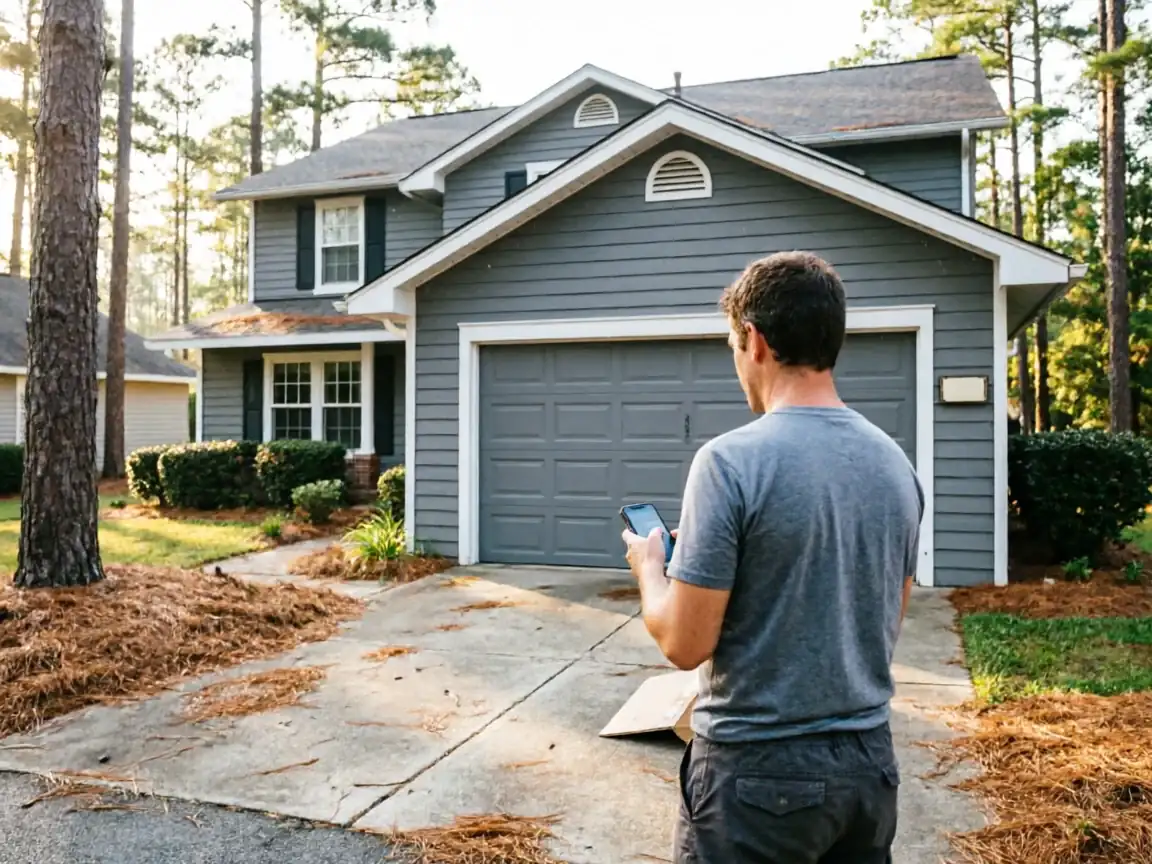
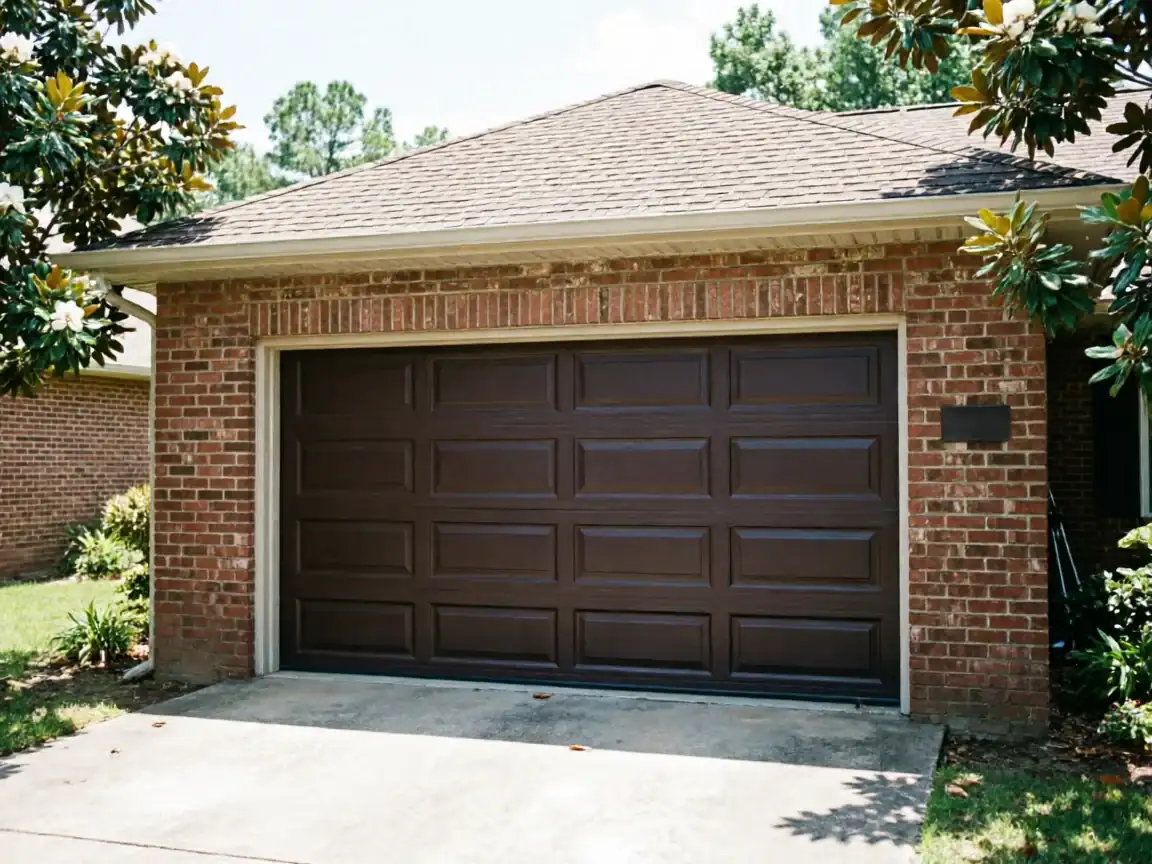
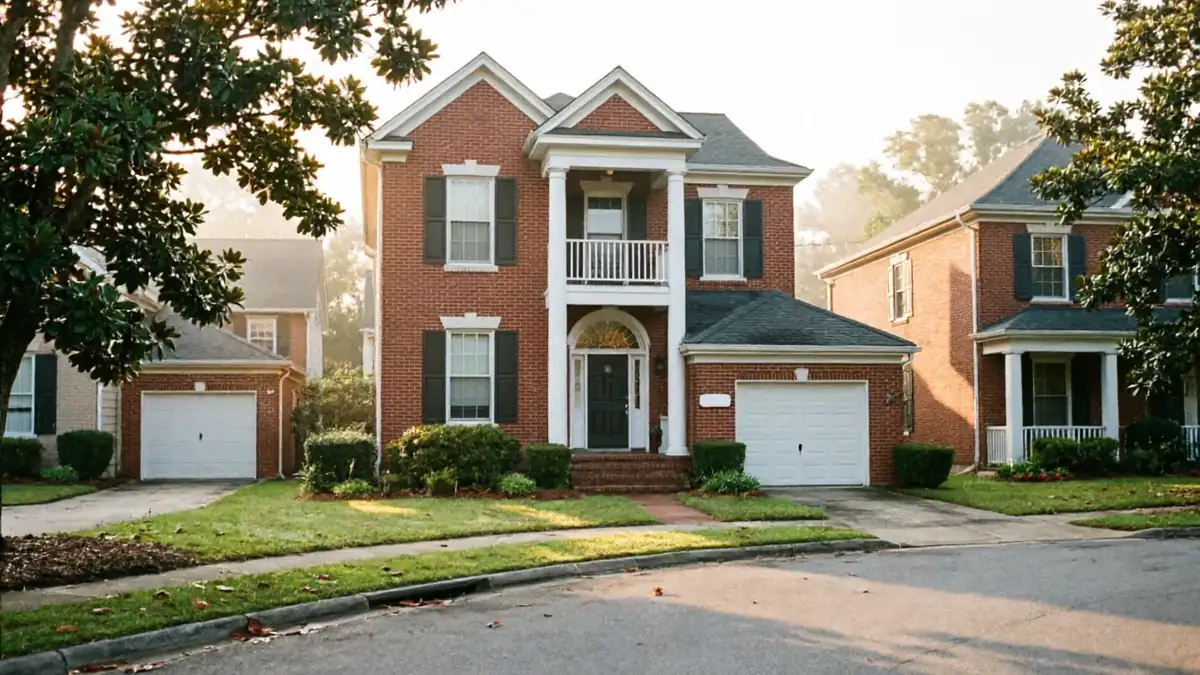
Most houses in the Valdosta service area were built between 1977 and 2004, with the bulk going up in the 1980s and 90s across five named areas of town. That matters for springs because torsion springs are rated for a set number of open-close cycles, not years, and a house pushing toward four decades old is a house whose original spring has been wound and unwound tens of thousands of times past any warranty it ever had.
Valdosta sits in a mild climate band with some freeze risk, not the deep freeze-thaw cycling that cracks concrete up north, but enough cold snaps to matter. Steel contracts in cold and expands in heat, and a spring that's already lost some of its temper from age handles that swing worse than a new one. Combine a 25-to-45 year old spring with even a handful of hard freezes a winter and you get metal fatigue showing up as a sudden snap, usually on the coldest morning of the week, not gradually.
This isn't a defect in how these houses were built. It's just what happens to a mechanical part that outlives its rated life in a housing stock this age. Builders in the 80s and 90s used standard torsion hardware that was fine for its time - it just wasn't built to last forever.
What the Fix Involves
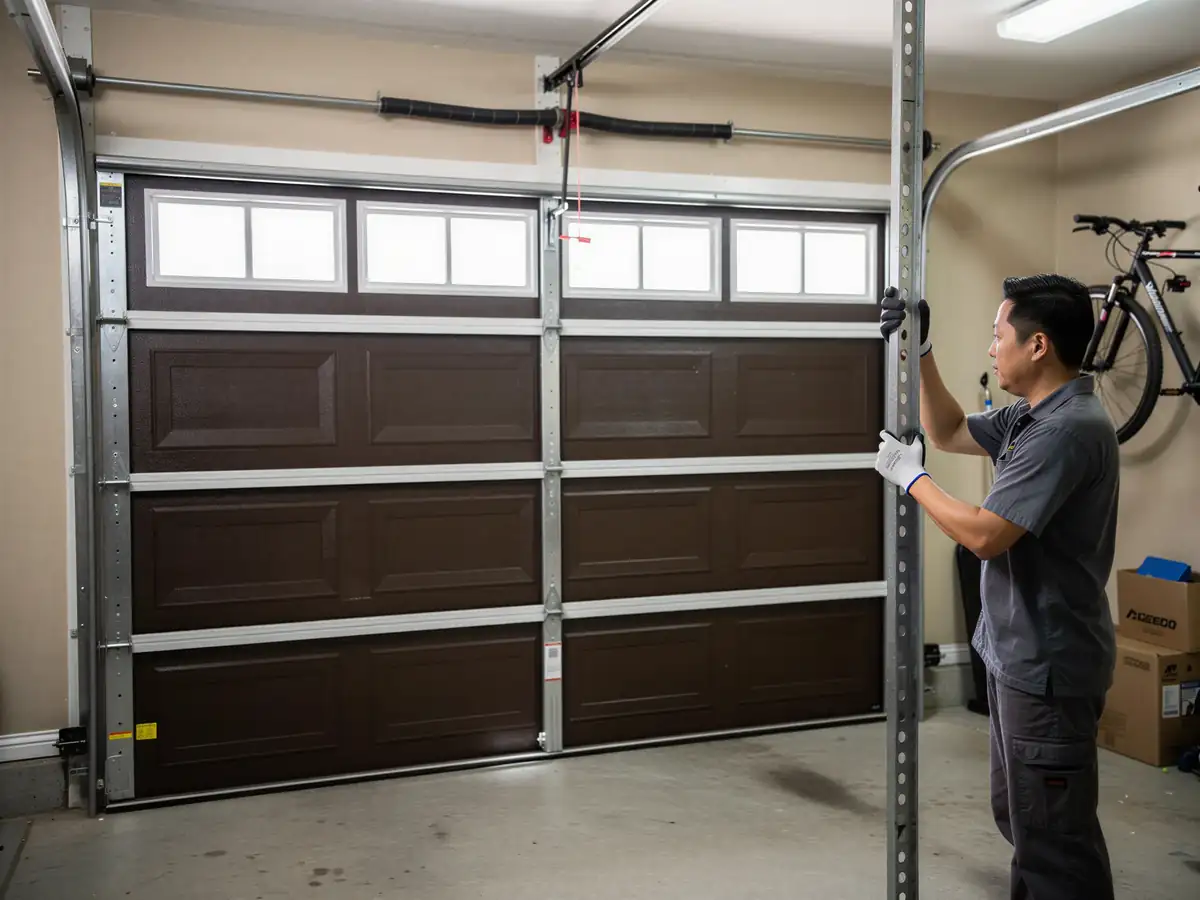
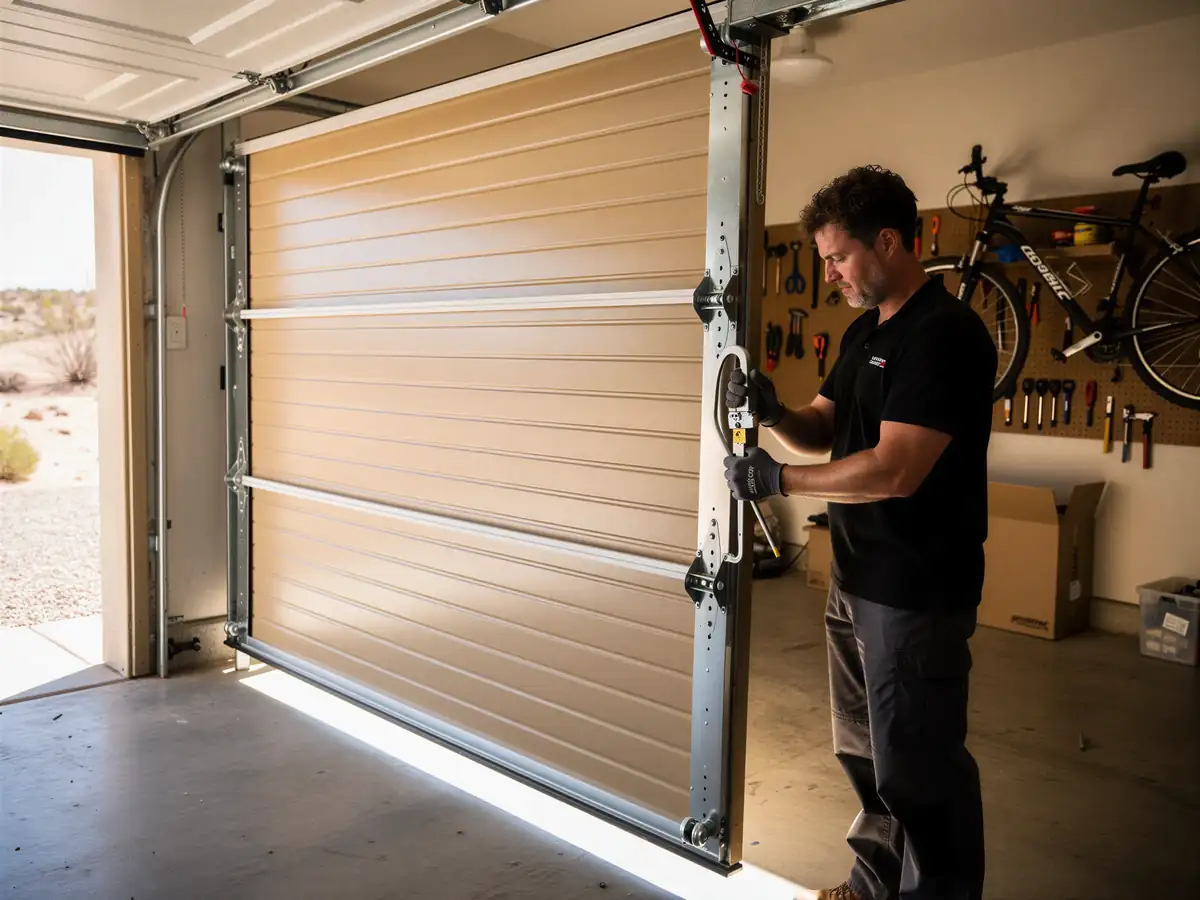
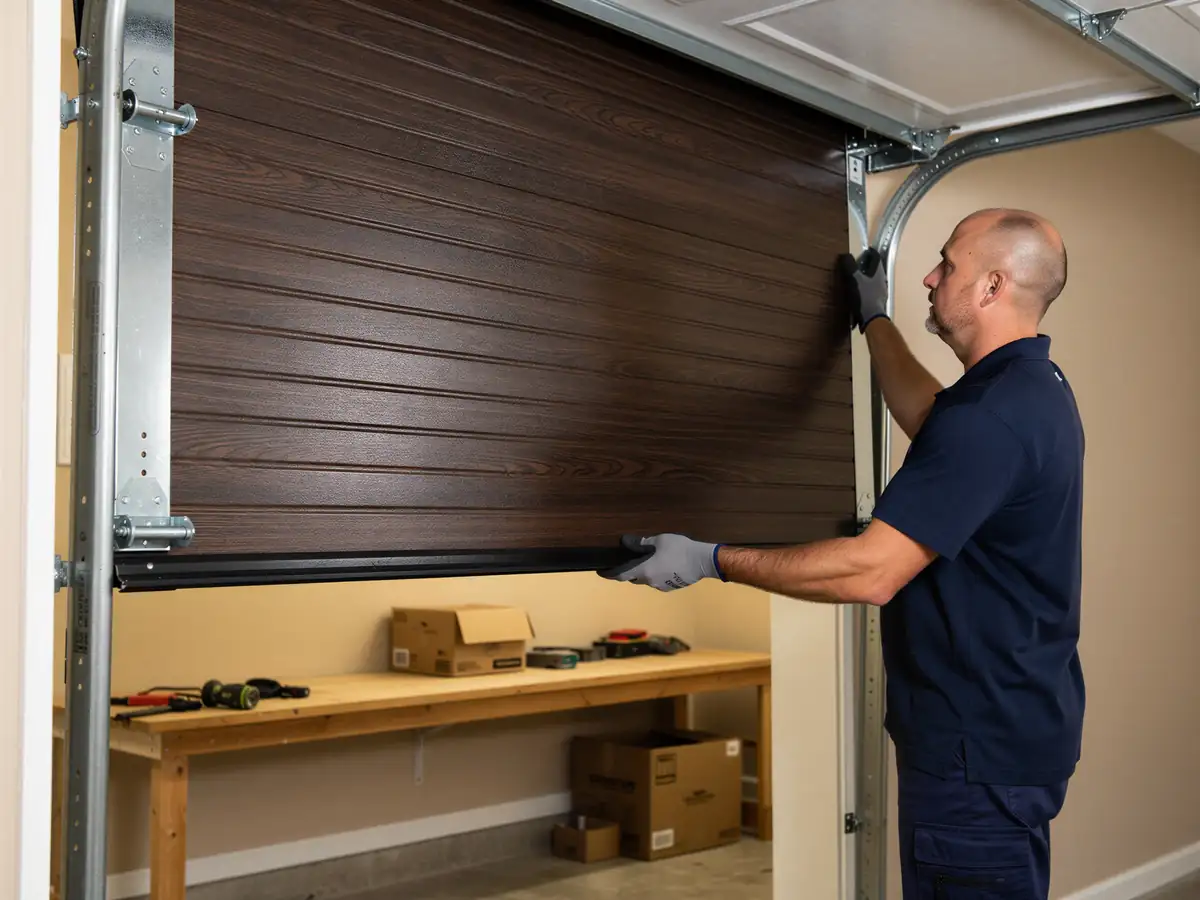
A spring repair starts with matching the replacement to the door
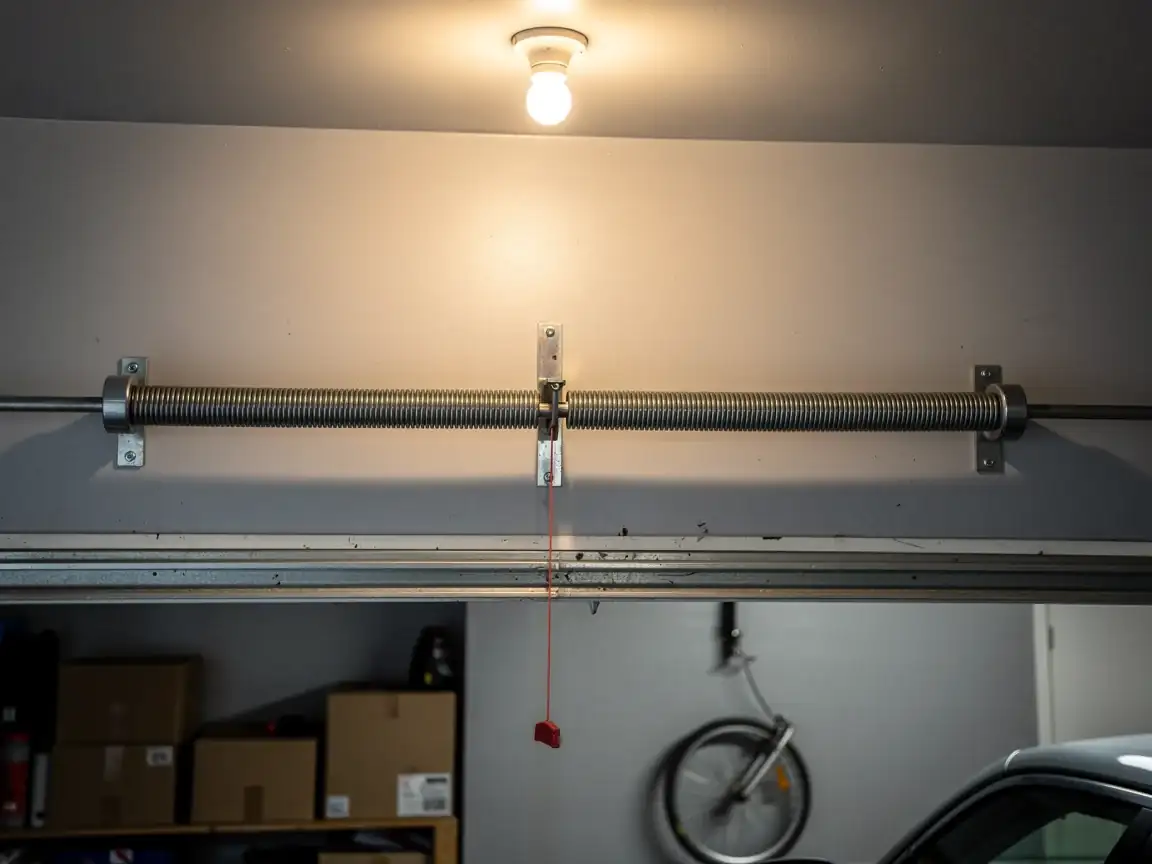
Not just grabbing a spring off the shelf. Wire gauge, coil length, and wind direction all have to match the door's weight and the drum size on the torsion bar, or the door will be out of balance the day it's reinstalled - too heavy for the opener, or so light it won't stay down.
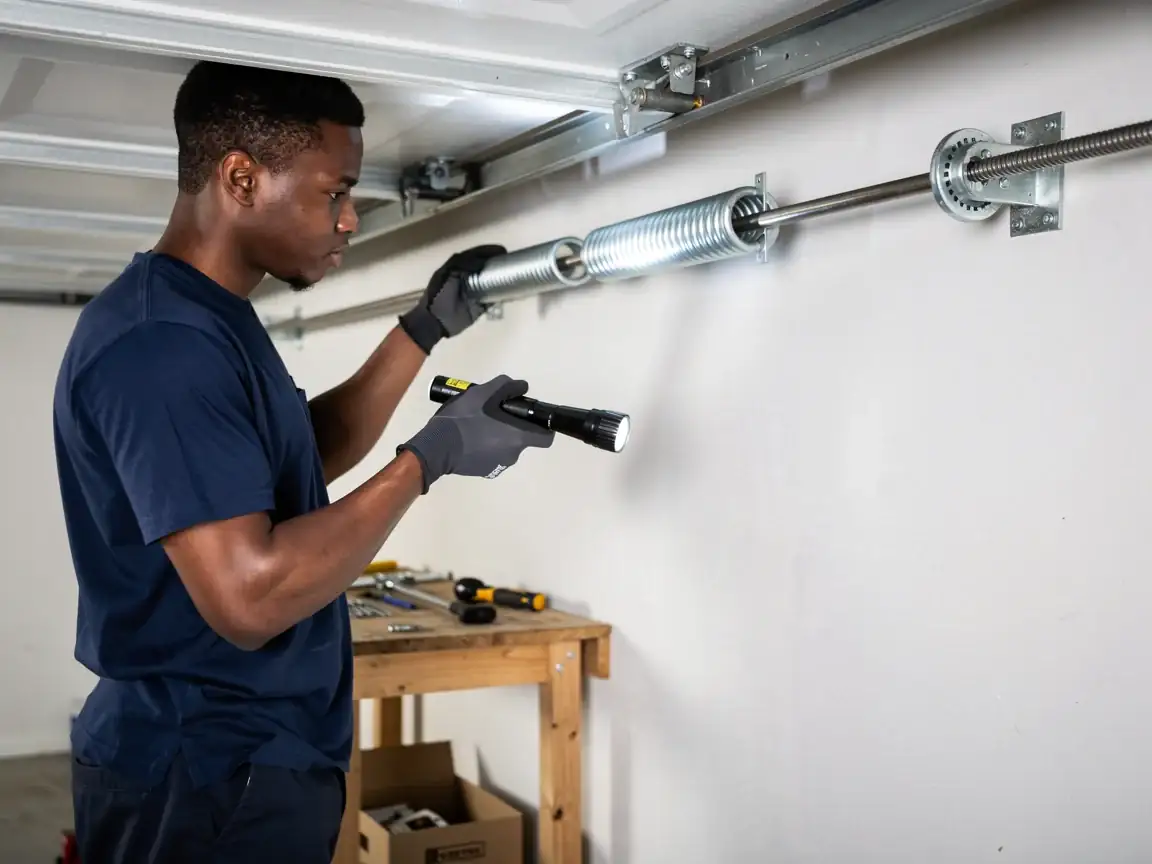
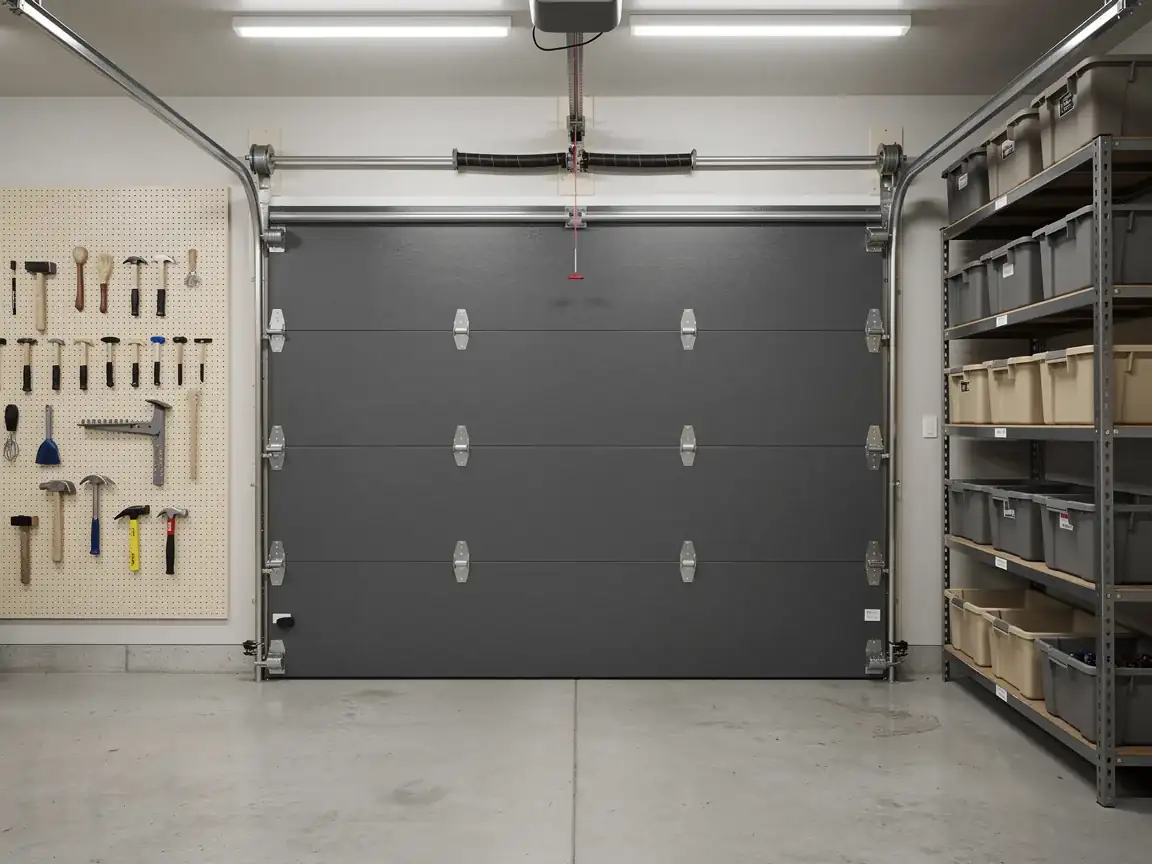
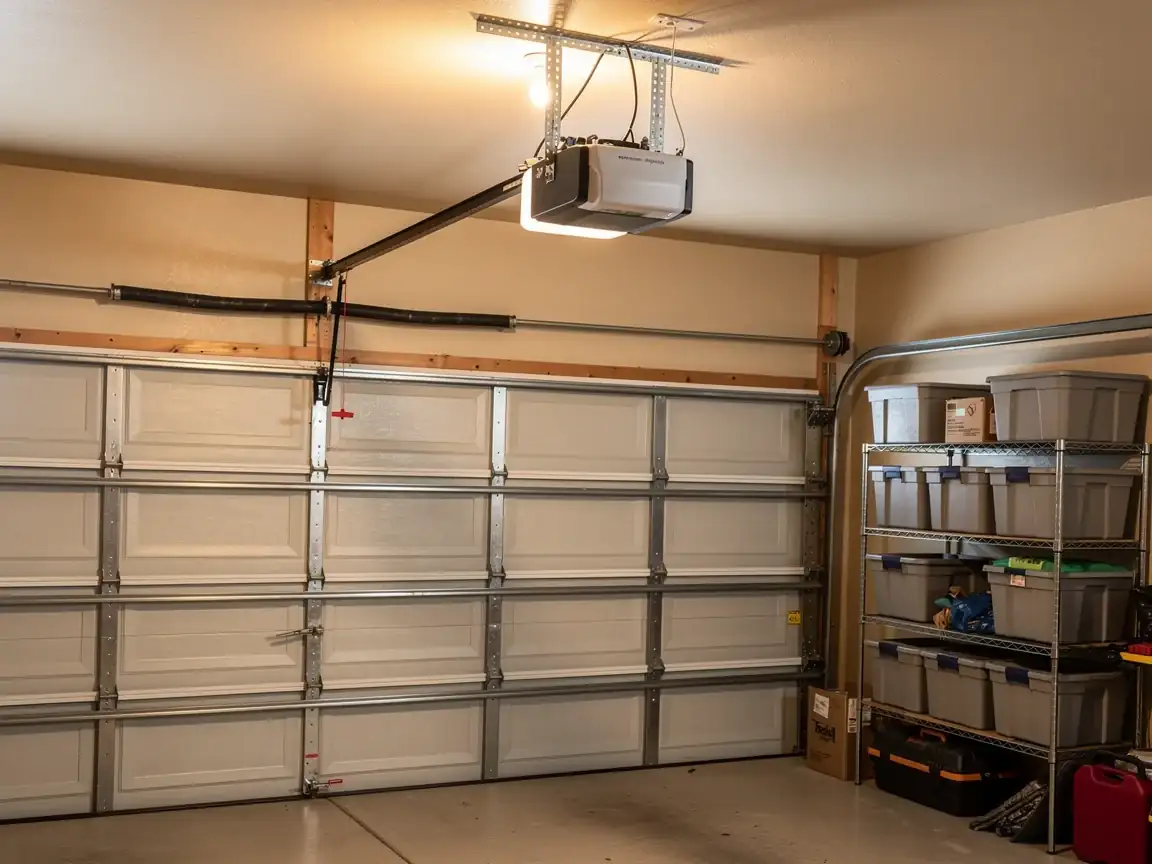
On a double-wide door we're almost always dealing with two springs working together on a single torsion bar, and if one has gone, the other is usually close behind from the same years of use, so we check both rather than replace one and get called back in a month
Safety cables through the center of each spring are part of the job too - they're what keeps a broken spring from becoming a projectile in the garage.
Once the new spring is wound to the correct number of turns for that door's weight
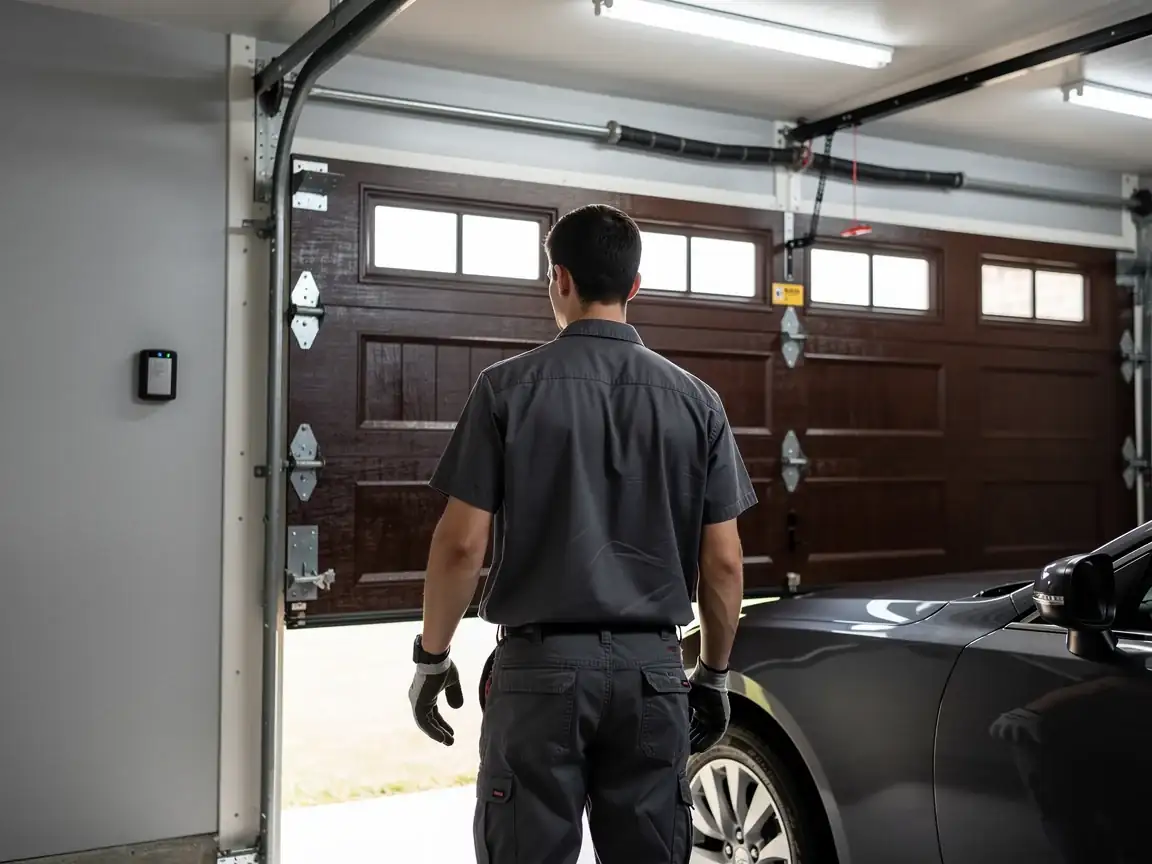
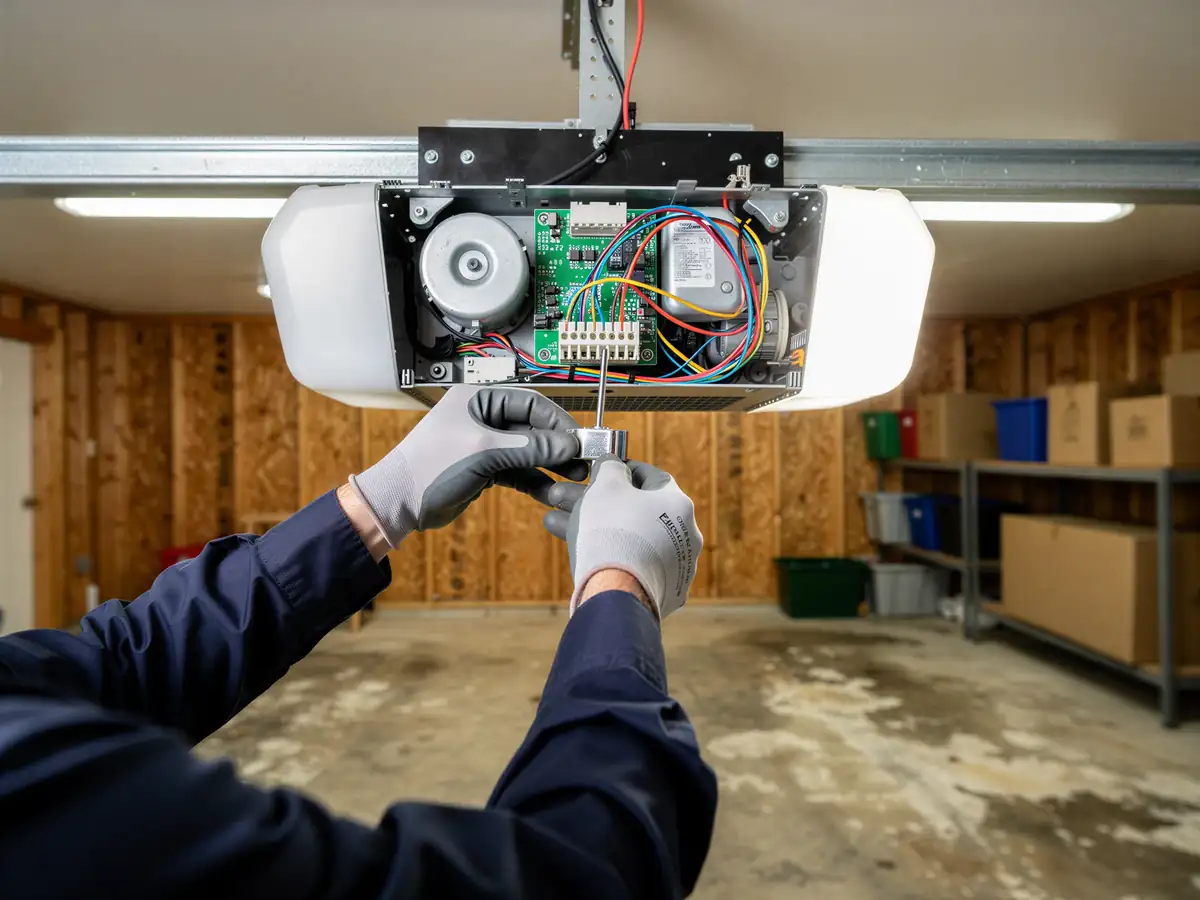
We check the whole opener system since a few months of running against a weak or broken spring puts load on the opener's motor and the drive gear it was never meant to carry. We won't tell you a motor is shot if it isn't - sometimes the opener is fine once the spring is doing its job again.
How It Shows Up
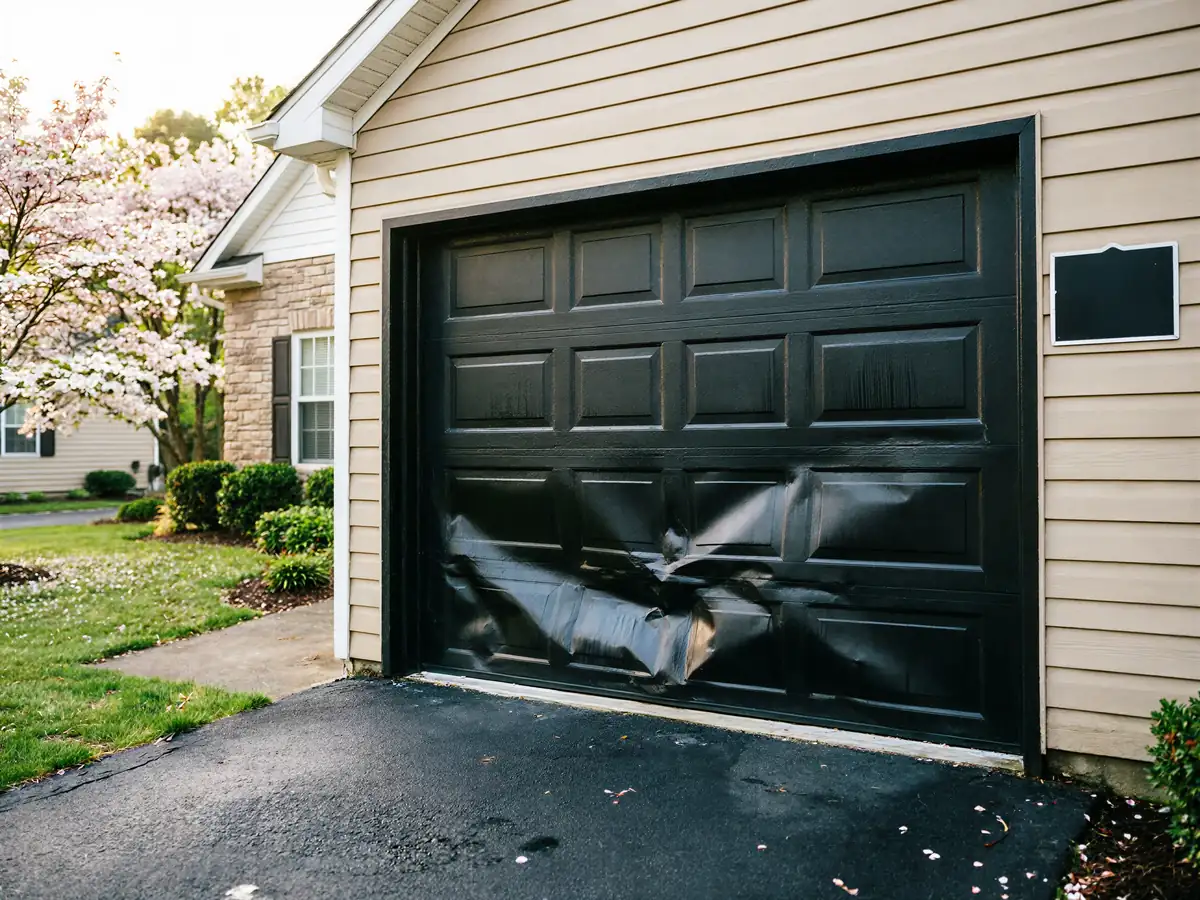
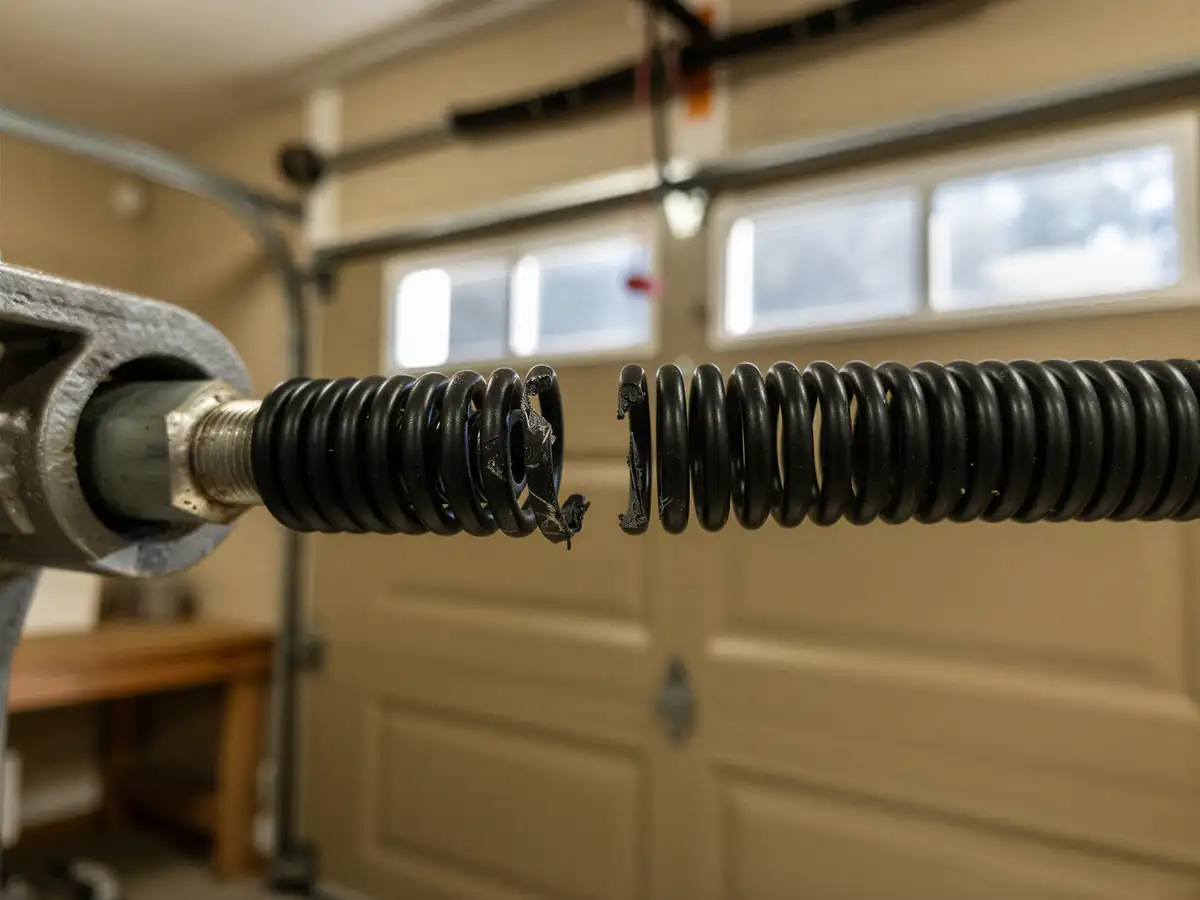
The classic sign is a door that won't budge, or one that the opener strains against and then gives up halfway. On older torsion setups common in this housing stock, you'll sometimes hear the snap itself - a loud bang from the garage, usually when it's cold, that homeowners mistake for something falling or a car backfiring outside.
A slower failure looks different: the door feels heavier each week, it slams down the last foot instead of settling, or the cables start to look like they're sitting loose in their drums because there's no tension holding them taut. If you're lifting the door by hand and it feels like dead weight with no spring assist at all, that spring is likely already broken, not just weak.
With 2,139 owner-occupied houses among 4,622 households across the Valdosta service area, spring failure tied to original hardware from the 1977-2004 building years is one of the most common calls we take. It's rarely a surprise failure - it's a part reaching the end of a life span nobody was watching.
What It Costs
We don't post a flat number here because spring jobs vary with door weight, whether it's one spring or two, and what shape the drums and cables are in once we're looking at the actual torsion bar - a number that fits a single-car door doesn't fit a heavy double door, and quoting one price for both wouldn't be honest.
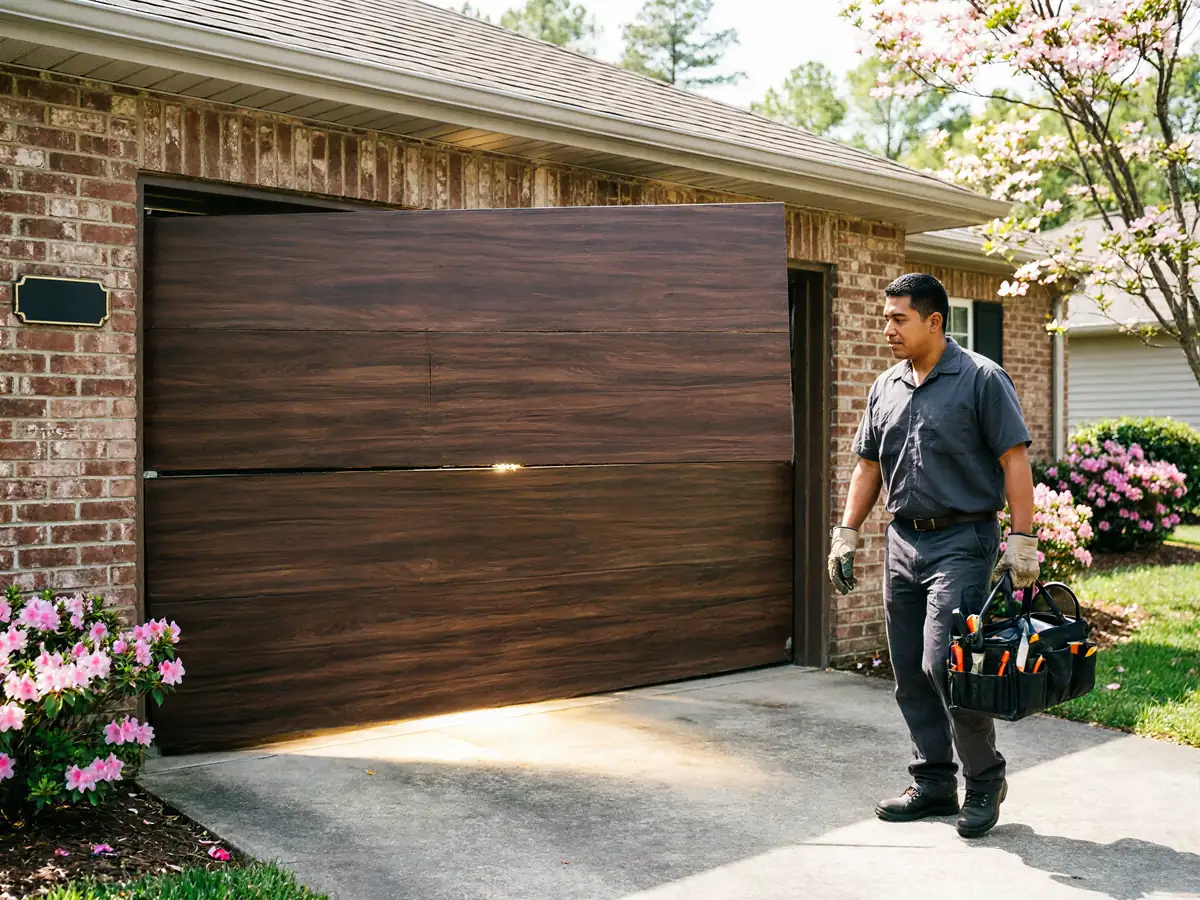
What we can tell you is that replacing a broken spring is a smaller job than replacing a door, and most of the time that's exactly the right call - the door panels and track in these 1980s-90s era houses usually outlast the springs by a long way. If a spring has broken and taken a cable or a drum with it, that adds to the job, and we'll walk you through what we're seeing before we touch anything.
We serve Valdosta and the towns around it - Dasher, Hahira, Lake Park, Quitman, and Lakeland, running 8 to 18 miles out - and the quote we give one household in the area is based on their door, not a regional average.