Why It Happens Here
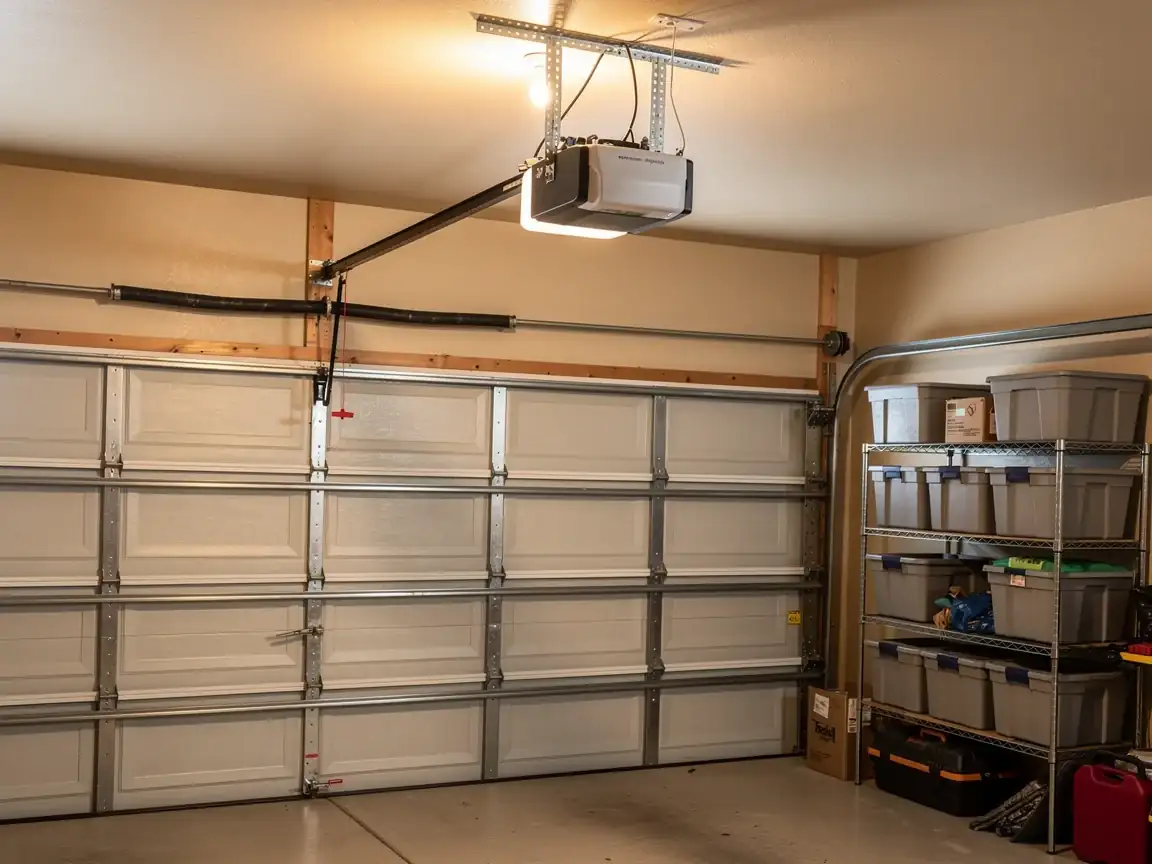
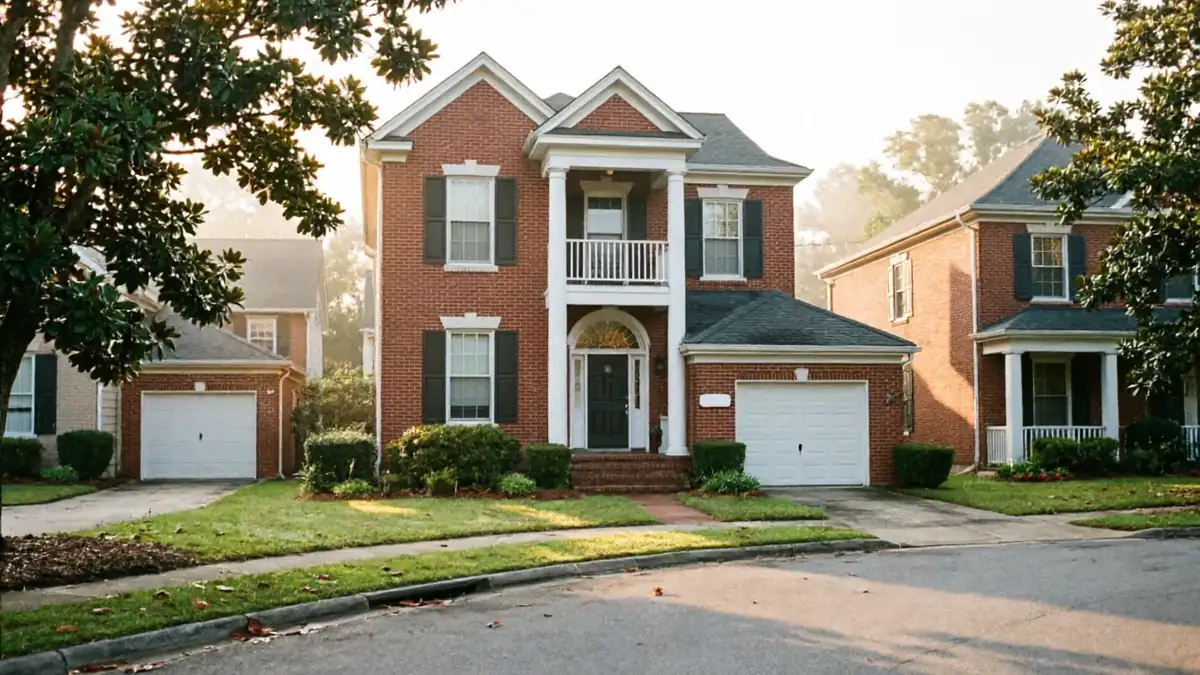
Most of the housing across the Valdosta service area went up between 1977 and 2004, with the bulk of it dating to the 1980s and 90s. That matters for openers because a huge share of the units out there are either the original ones builders installed or a first replacement from a decade or two back. Chain-drive openers from that era used gears, capacitors, and logic boards that just weren't built to run for forty-plus years, and a lot of them are still bolted to the ceiling doing exactly that.
The climate here is mild with occasional freeze, which isn't the brutal cold-and-thaw cycle that kills openers in northern states, but it brings its own wear pattern. Humidity swings through the year stress belts, chains, and the plastic gears inside the motor housing more than people expect, and the odd hard freeze night can seize up old grease in a drive screw that hasn't been serviced since it was installed. You don't get one dramatic failure event - you get slow fatigue that shows up as a grinding gear or a dead circuit board one ordinary Tuesday.
Put those two things together - an aging housing stock and a climate that wears parts down gradually instead of all at once - and opener repair becomes one of the most common calls across this whole area, not just in any one neighborhood.
What the Fix Involves
The first step is figuring out whether the opener is actually the problem or whether it's a spring, cable, or track issue that's making the opener work harder than it should and burning it out early
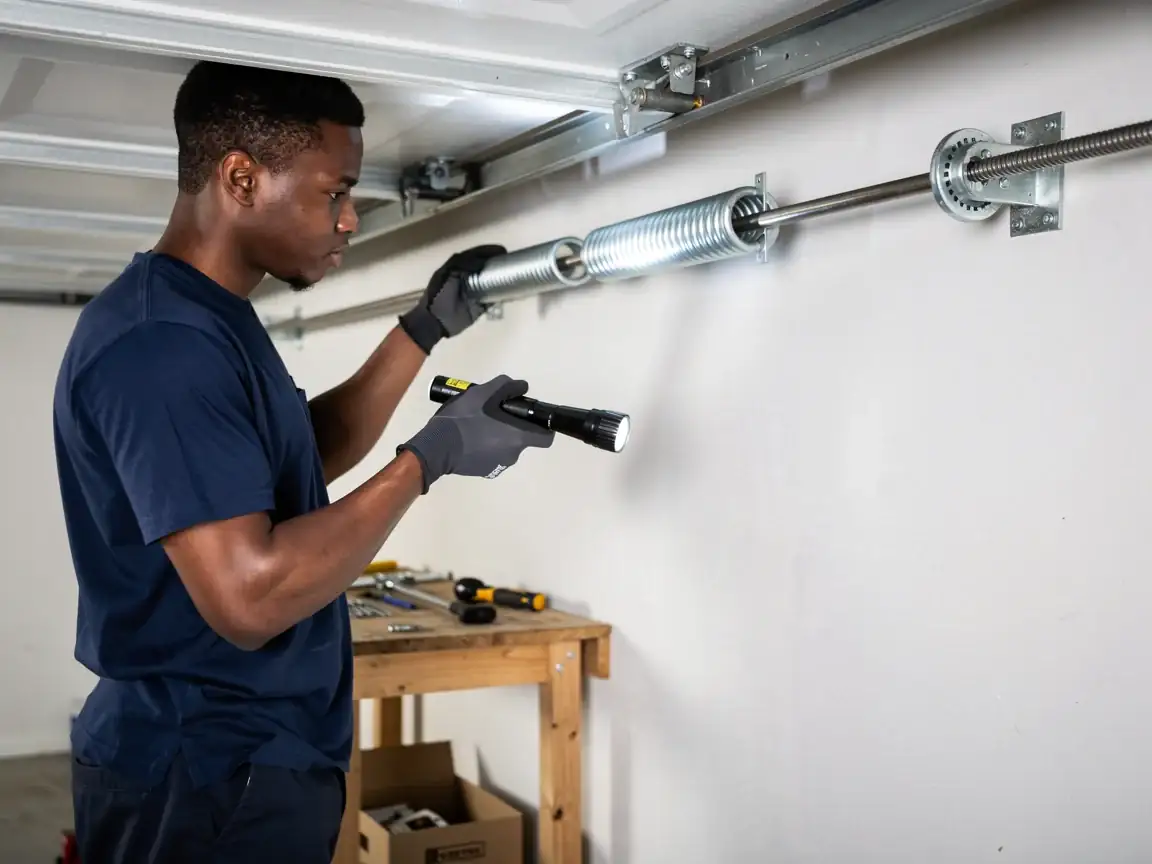
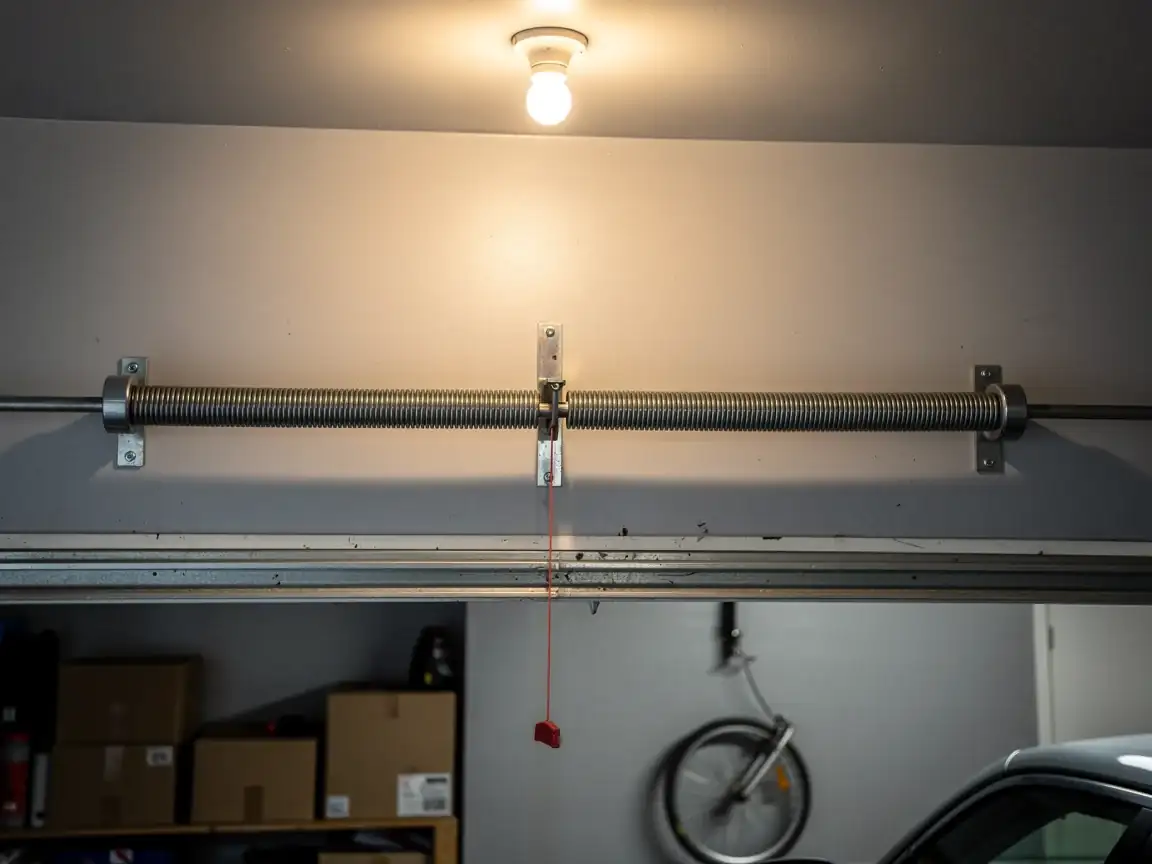
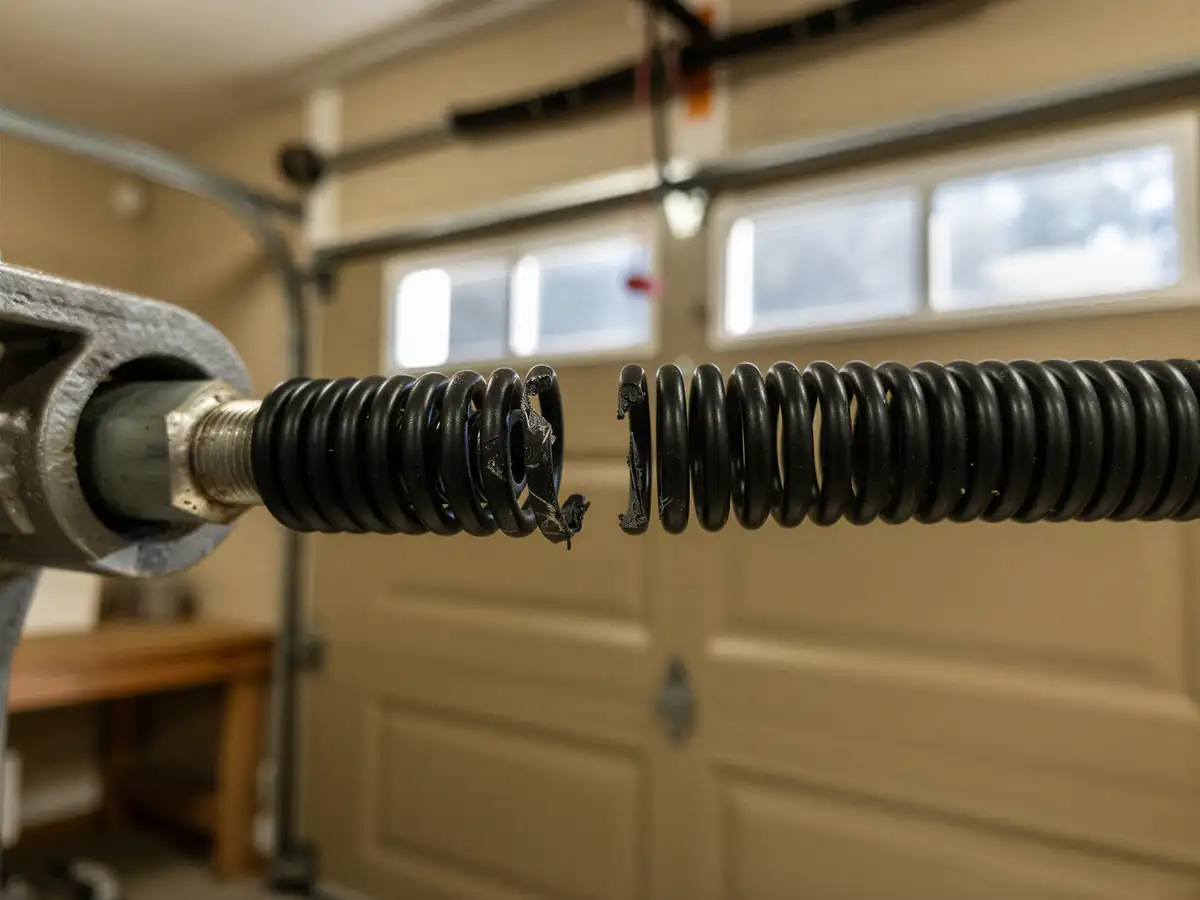
A lot of calls that start as "opener's dead" turn out to be a broken torsion spring forcing the motor to lift the full weight of the door on its own, which cooks the gears fast.
Once it's confirmed to be the opener itself
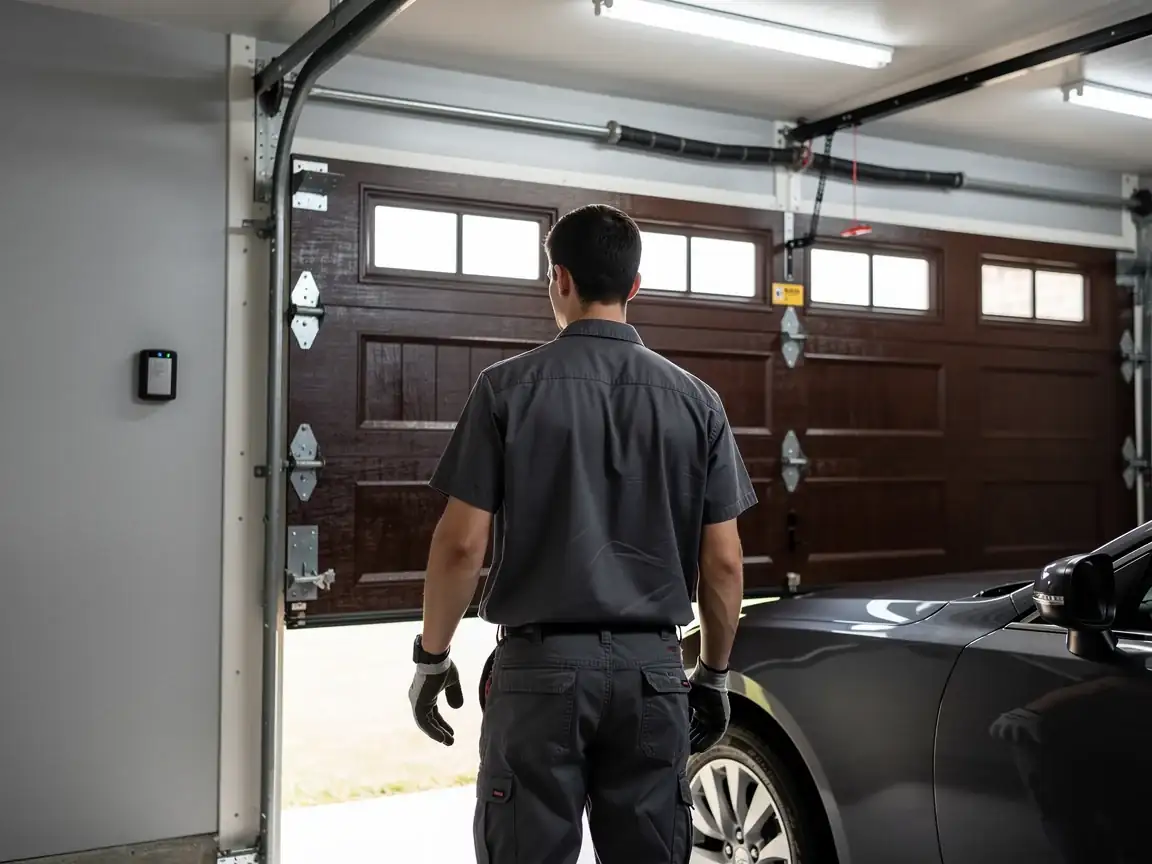
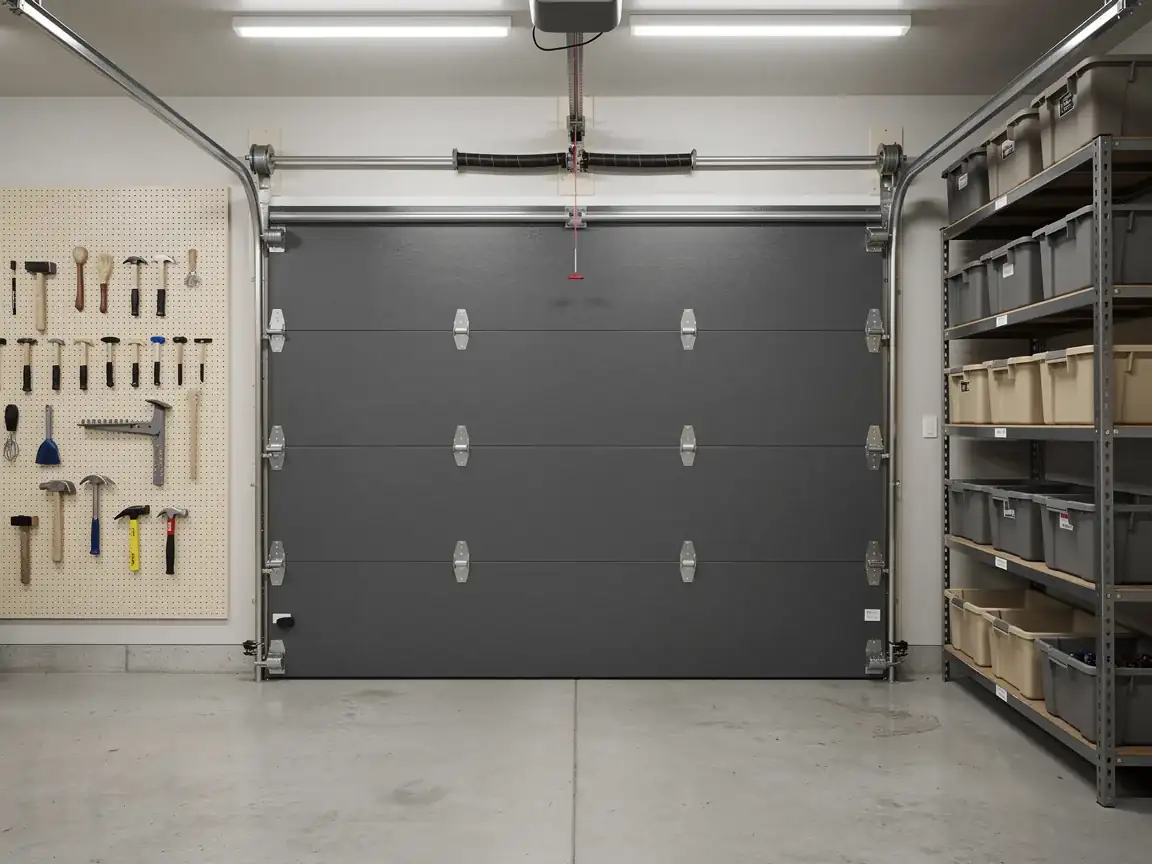
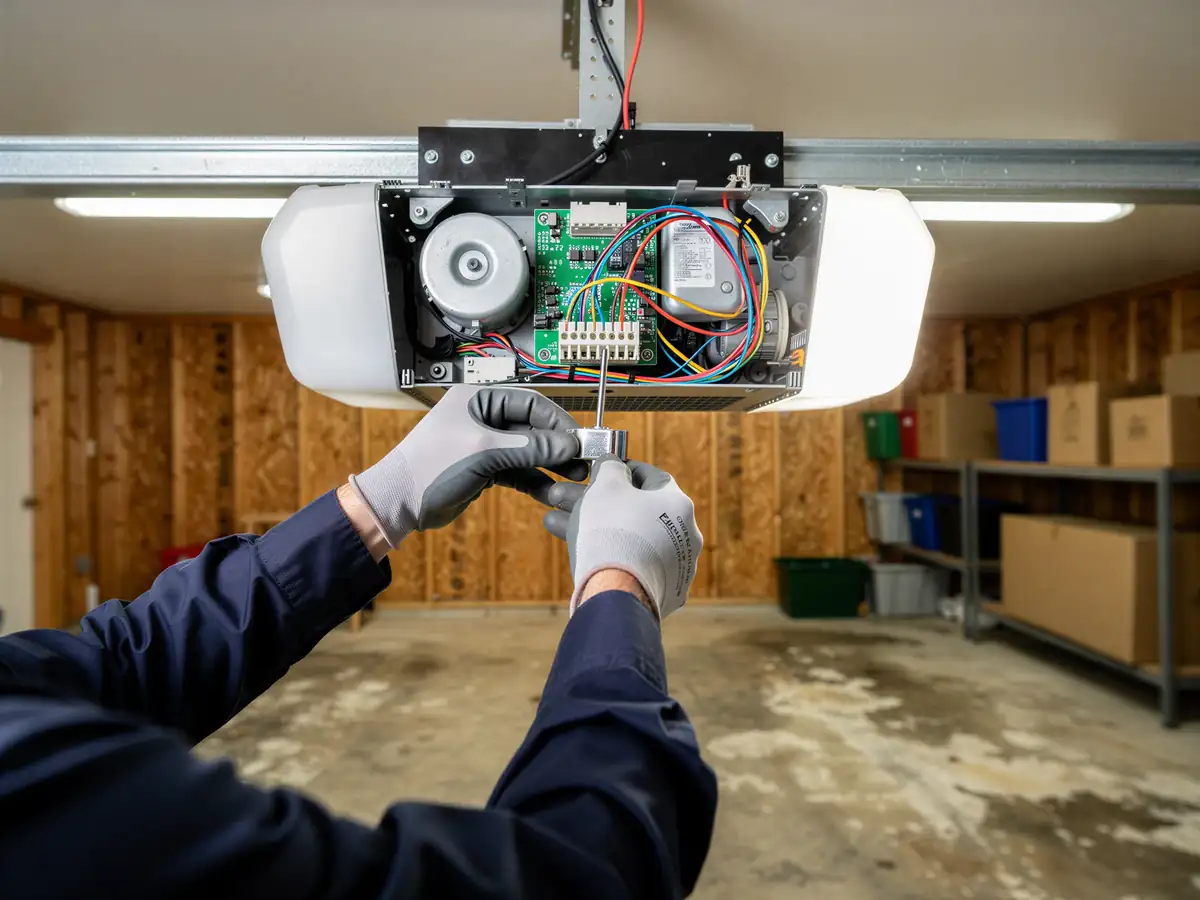
The usual checks are the drive gear and sprocket (the most common failure point on older chain and screw-drive units), the capacitor and circuit board, the safety sensor alignment at the bottom of the track, and the travel limit settings that control how far the door opens and closes. On units from the 1980s and 90s stock common in this area, replacement parts for the exact model are often harder to source than parts for a current unit, so part of the job is deciding honestly whether a repair is worth doing or whether the unit has reached the point where a new opener costs less in time and parts than chasing discontinued gears.
We don't carry parts for every opener ever made
Some older models are past the point where a repair makes financial sense, and we'll say so rather than string a job along.
How It Shows Up
The most common complaint is a door that starts to open or close and then reverses on its own, which usually points to misaligned safety sensors or a travel limit that's drifted out of adjustment rather than anything wrong with the motor. A grinding or stripping sound right before the door moves is almost always the nylon drive gear inside the motor housing, a part that wears out predictably on openers that have been running daily for fifteen or twenty years.
A remote that works only when you stand right next to the opener, or a wall switch that works but the remote doesn't, usually traces back to a failing circuit board or a dying antenna wire rather than a dead remote battery. Lights that blink a set number of times when you try to operate the door are the opener telling you which safety circuit tripped - most newer units have this built in, older ones don't, which is one more reason the age of the unit changes how a technician approaches the call.
And then there's the opener that simply hums and doesn't move the door at all. That's often the capacitor, and on the chain and screw-drive units common in houses built in the 80s and 90s here, that part has usually never been replaced since the day it left the factory.
What It Costs
We don't have a fixed price list to quote here, since the right number depends on the opener's age, drive type, and what's actually failed - a sensor realignment and a full motor replacement aren't in the same ballpark, and we're not going to pretend otherwise with a made-up figure. What we can say is that the median household income across the service area sits around $38,571, and that's part of why the decision between repairing an older opener and replacing it outright gets made carefully here rather than automatically defaulting to a new unit.
For a lot of the 1980s and 90s openers still in service, the honest math often favors replacement once you're past a second or third repair, since parts for discontinued models get harder to find and more expensive relative to a new unit each year. For newer installs, a targeted repair - a gear, a sensor, a circuit board - is usually the more sensible call. A technician can give you an actual number once they've looked at the unit and know what's actually broken, but we'd rather tell you that up front than toss out a range that doesn't match your door.