What Most People Get Wrong
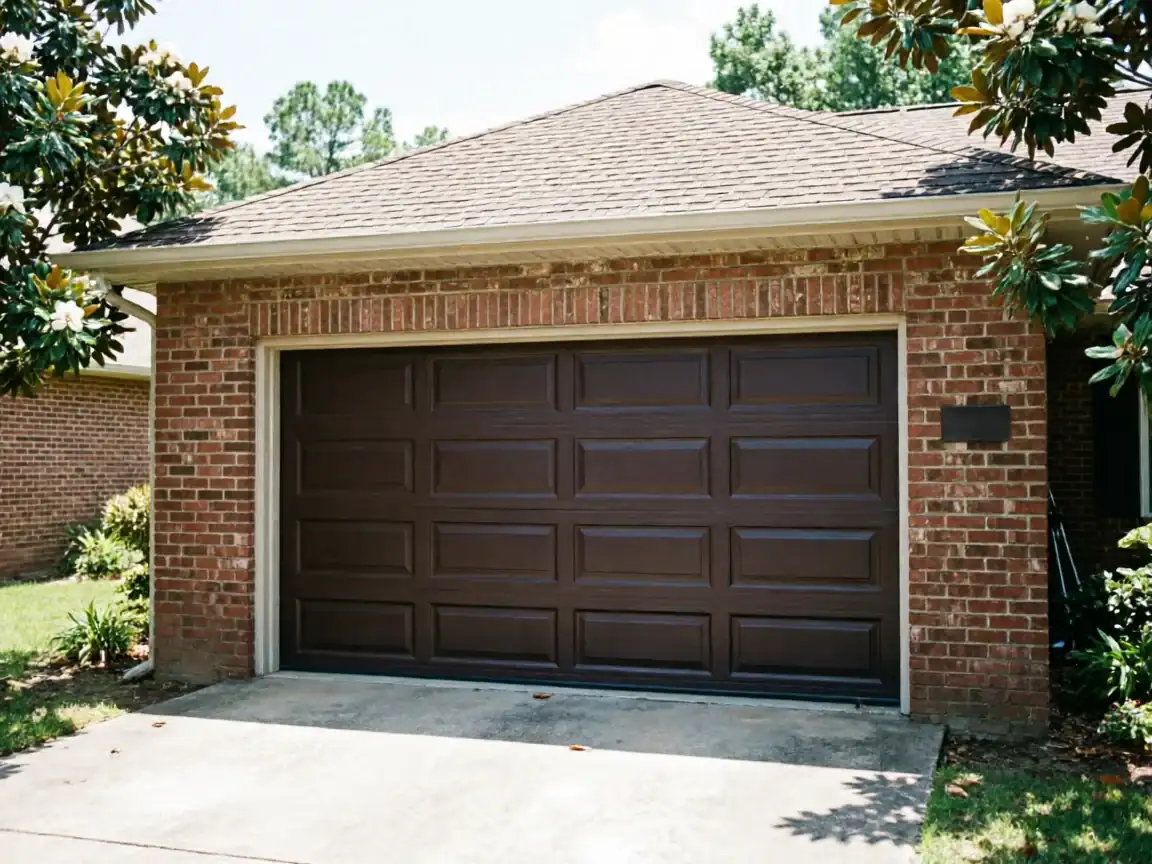
Most of the houses we work on in this area went up between 1977 and 2004, with the median landing around 1989. Homeowners assume that because the house itself isn't old, the garage door must be fine too - insulated, weathertight, up to whatever code applies now. It usually isn't.
Across the five main pockets of mostly 1980s and 90s construction we see in the service area, the garage door was almost never treated as part of the building envelope. It was a steel panel bolted to a track, picked for price, not for performance. Insulation wasn't a line item buyers asked about, and builders in that era weren't required to add it. So you can have a perfectly solid 1991 house with a door that's a single layer of steel and nothing else - no foam core, no thermal break, no R-value sticker anywhere on it.
The mistake is treating the door's age as tied to the house's age. They're often the same door from day one, but the standards that shaped them are not the standards anyone assumes apply. If your house falls in that 1977-2004 window, don't guess - go look at the door itself.
What to Check
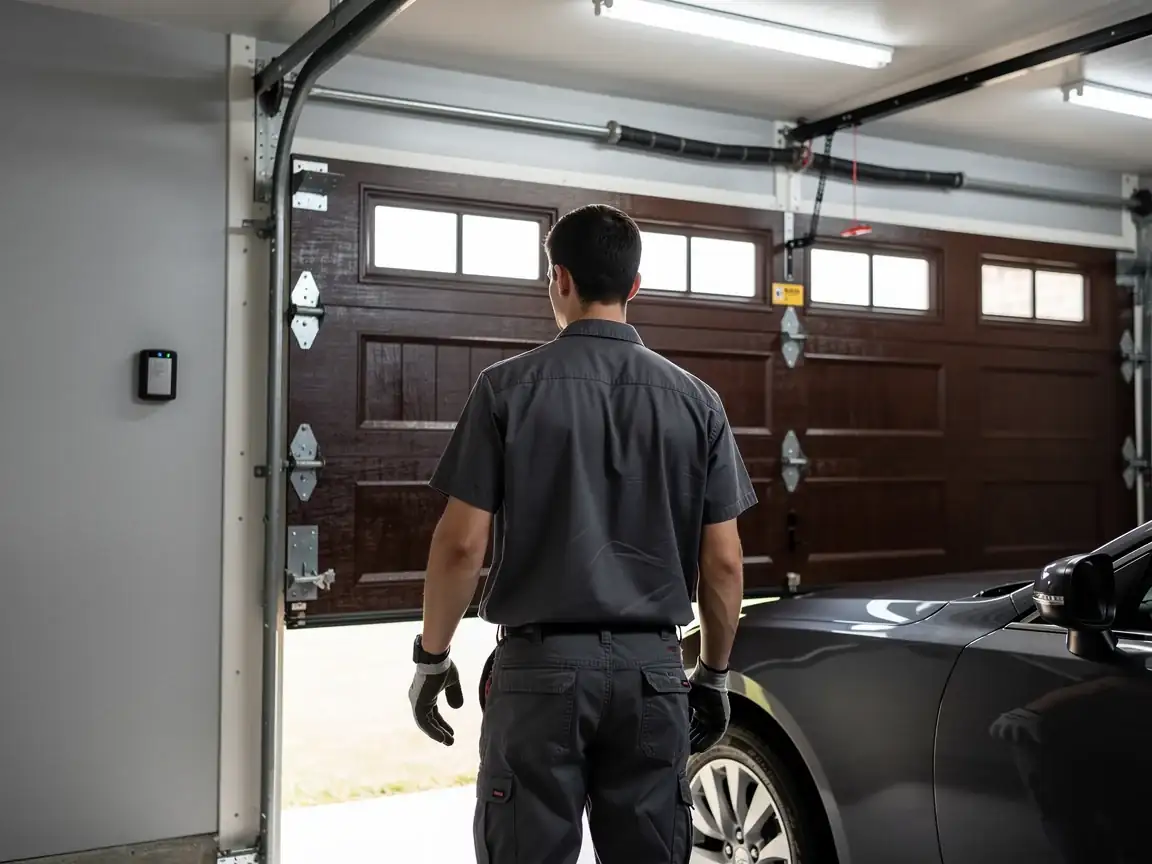
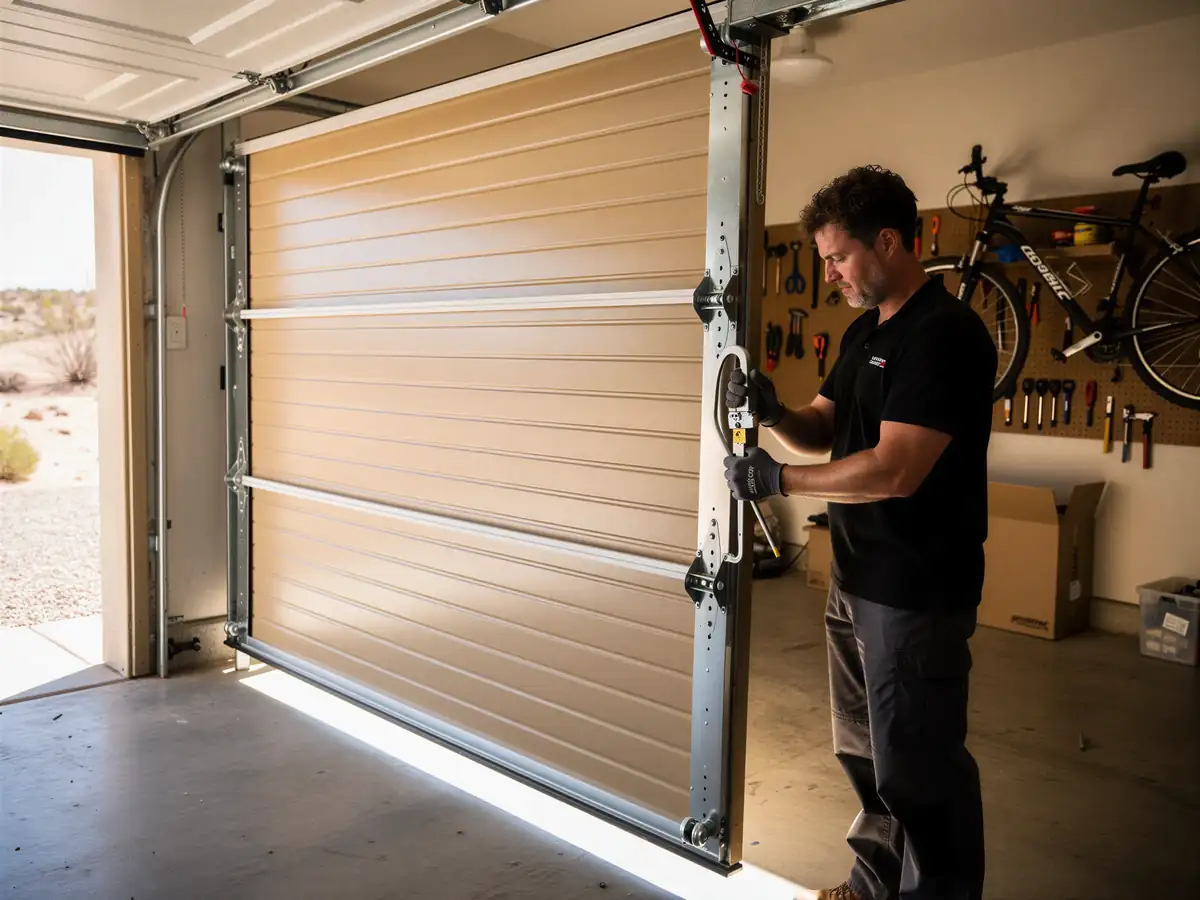
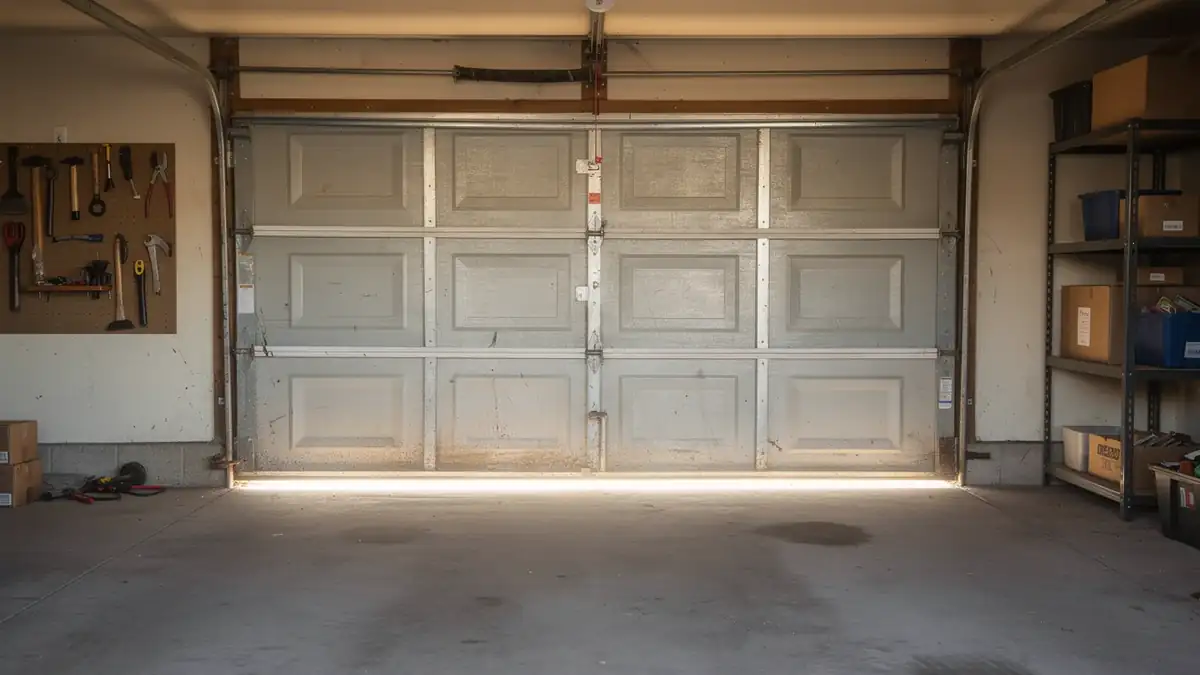
Open the door and look at the inside face of a panel
If you see bare steel with horizontal ribbing and nothing behind it, that's a single-layer door - no insulation, no second skin. If there's a sandwich of steel, foam, and steel, you've got an insulated door, which means it was either replaced at some point or built later in that 1977-2004 range when a few more builders started offering it as an option.
Check the weatherstripping at the bottom and sides
In a mild climate with occasional freeze, the rubber doesn't get destroyed by hard winters, but years of heat and humidity cycling still dries it out and cracks it, which lets moisture track into the bottom panel.
Look at the bottom foot of each panel for bubbling paint or rust starting from the inside out
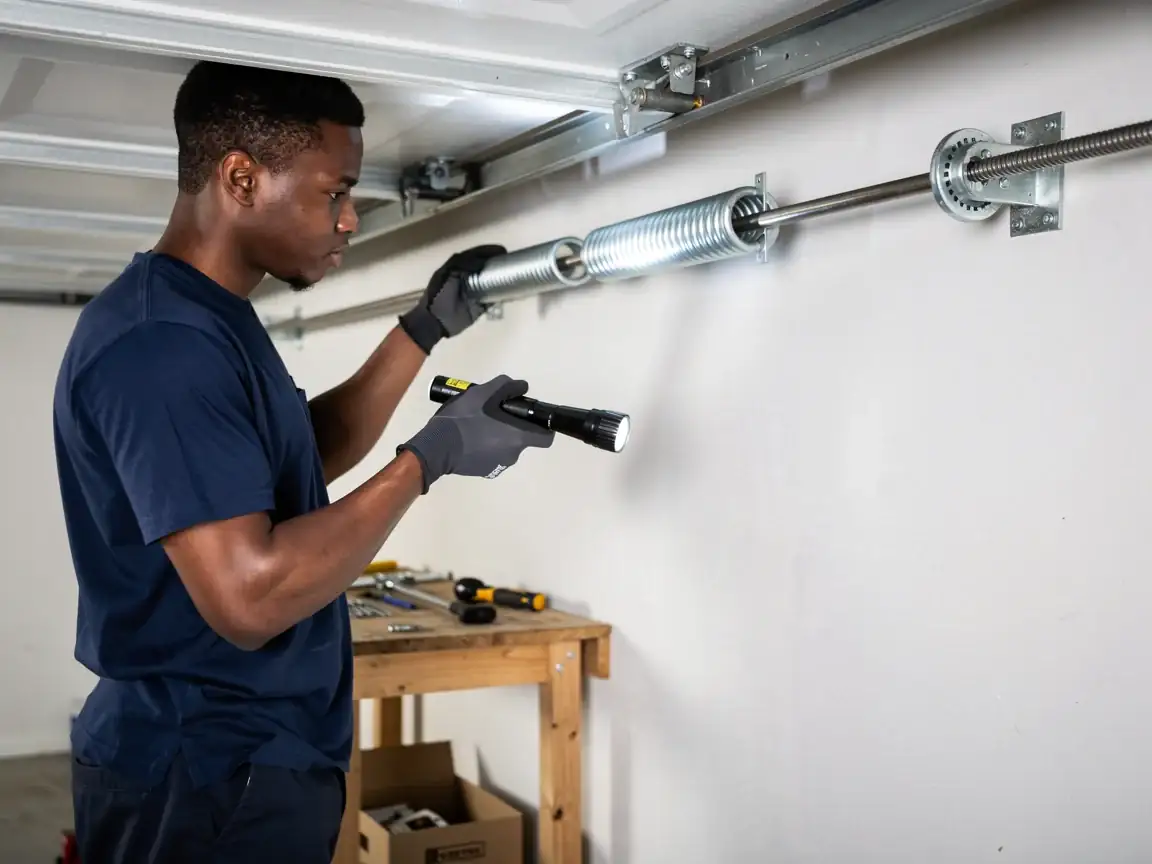
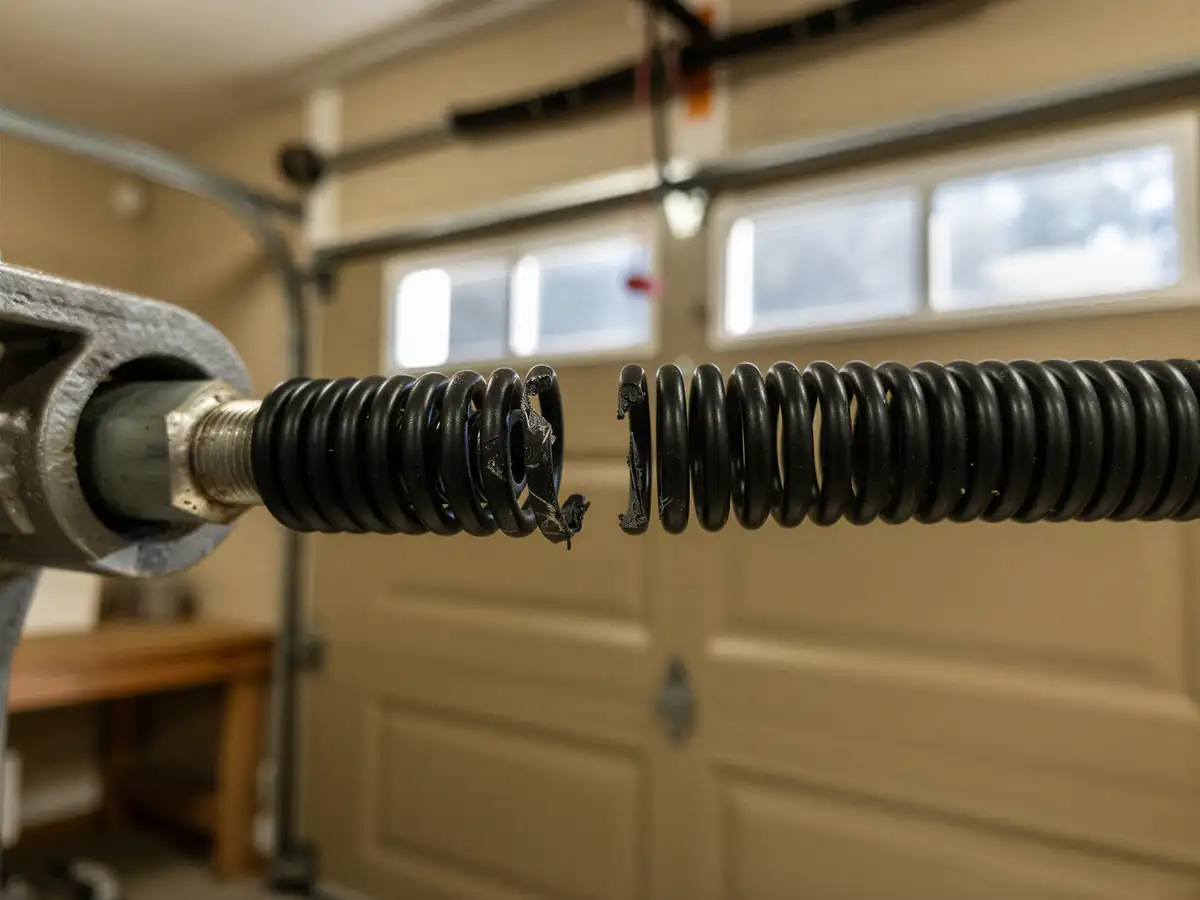
A sign moisture has been sitting between the skins or behind unpainted steel for a while. Also check that the springs match the door's actual weight; a lot of these older doors have had panels swapped individually over 20-plus years, and mismatched panels change how much the spring needs to lift.
The Problem
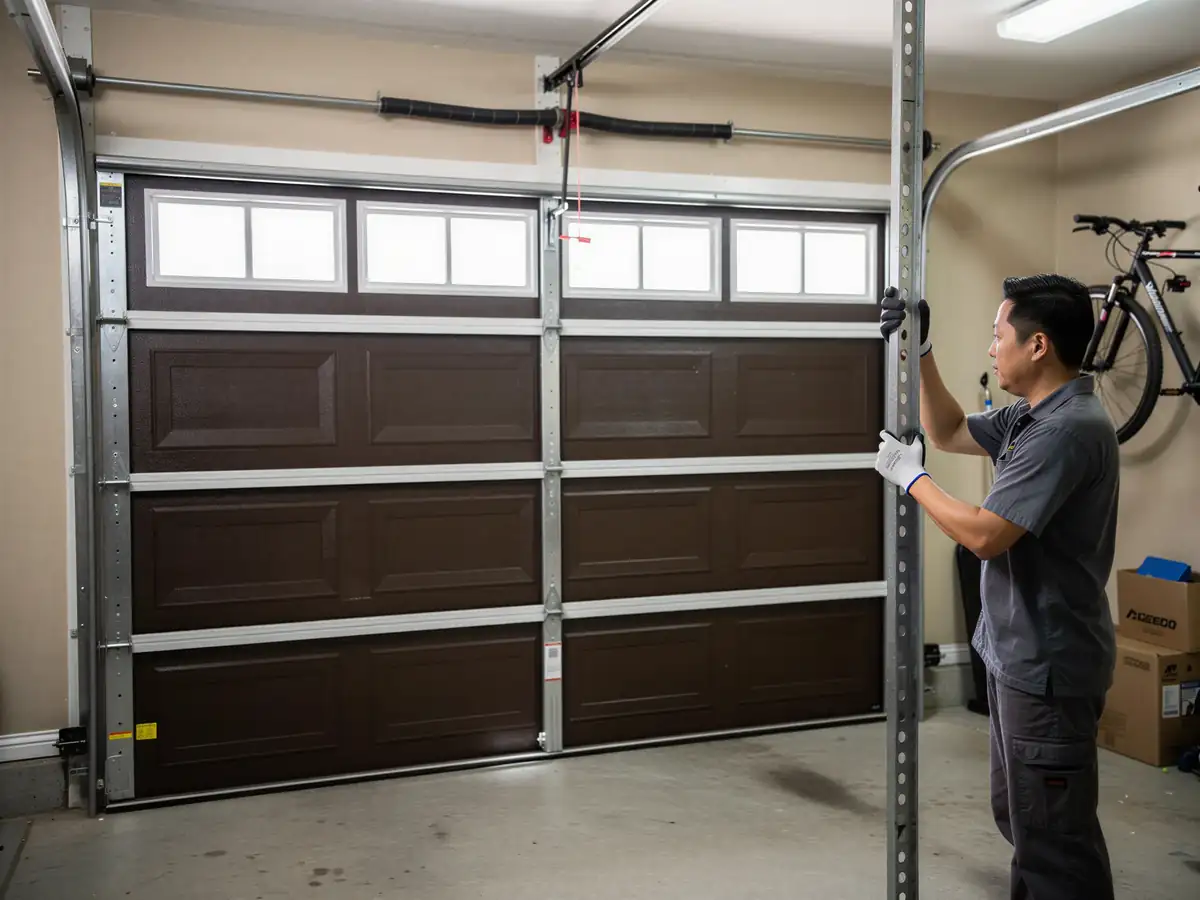
Doors built across that 1977-2004 stretch weren't standardized the way newer doors are. A 1980 door and a 2002 door built for the same house style can use different track widths, different panel heights, and different spring sizing, even in the same neighborhood. That makes sourcing a matching panel or section harder than people expect - you're not just ordering a part number, you're matching an era.
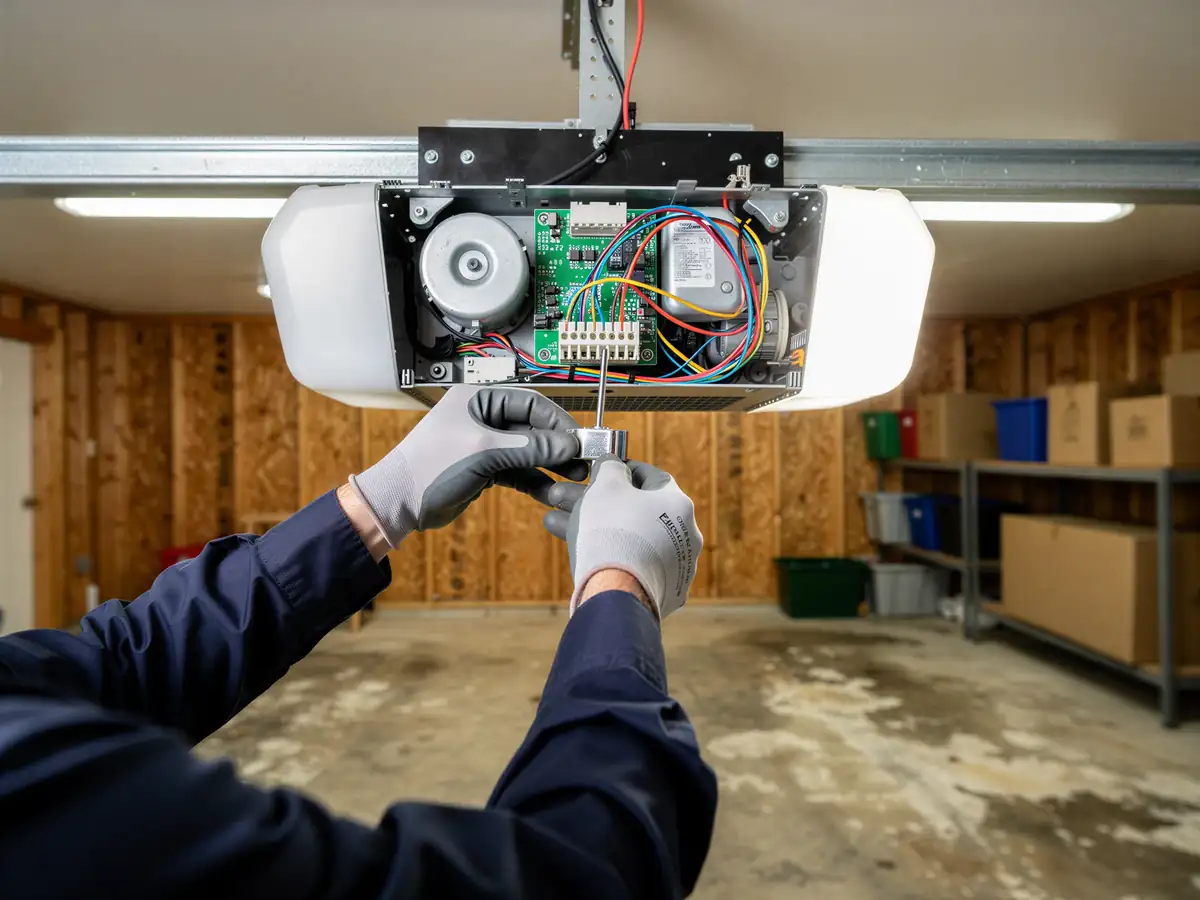
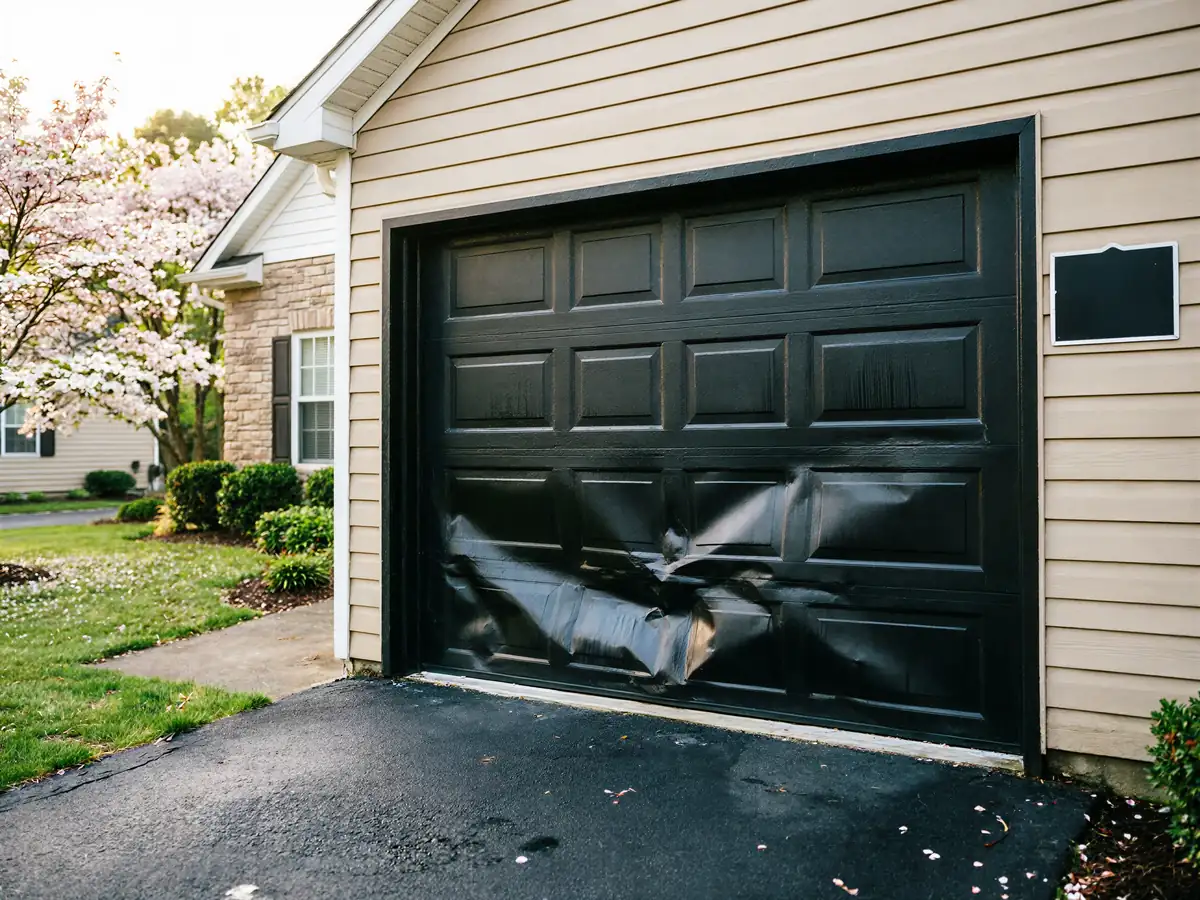
The bigger issue is what happens underneath the surface. Single-layer steel panels from this period flex more than insulated ones. Over two or three decades, that flexing works the seams and fasteners loose, and once a panel starts to bow, the rest of the door has to compensate - rollers bind, the opener strains, cables wear unevenly.
With 2,139 owner-occupied houses in the service area built mostly in that window, a large share of the doors we're called out to are 20 to 45 years old and were never designed to meet anything like a current energy or structural code. That's not a defect, it's just the standard of the day. But it means repairs on these doors are rarely a simple swap - we're often working around a part that hasn't been made in years.
What the Weather Here Does to It
This area sits in a mild climate band with only occasional freeze, so we don't get the kind of hard freeze-thaw cycling that cracks steel outright. What we get instead is sustained humidity, and that's arguably harder on an uninsulated door over time. Moisture gets into the seams of a single-layer panel, sits there, and rusts it from the inside where you can't see it until paint starts bubbling or a bottom corner goes soft.
On these older, uninsulated doors, that rust usually starts at the bottom two panels first, since that's where condensation and splashback collect. Hardware - hinges, rollers, the bottom bracket - corrodes slower here than it would in a wetter or harsher climate, but it still corrodes, and on a 25-year-old door that hardware is often original.
At a median household income of $38,571 in the area, replacing a whole door outright isn't a casual decision for most people, so we see a lot of patch repairs - a new bottom panel, a repaint, new weatherstripping - instead of full replacement. That's a reasonable call when the rest of the door is sound. It stops being reasonable once rust has gone past the surface and into the steel itself; at that point a patch just buys you another year or two, and I'll tell you that straight rather than sell you the patch.